
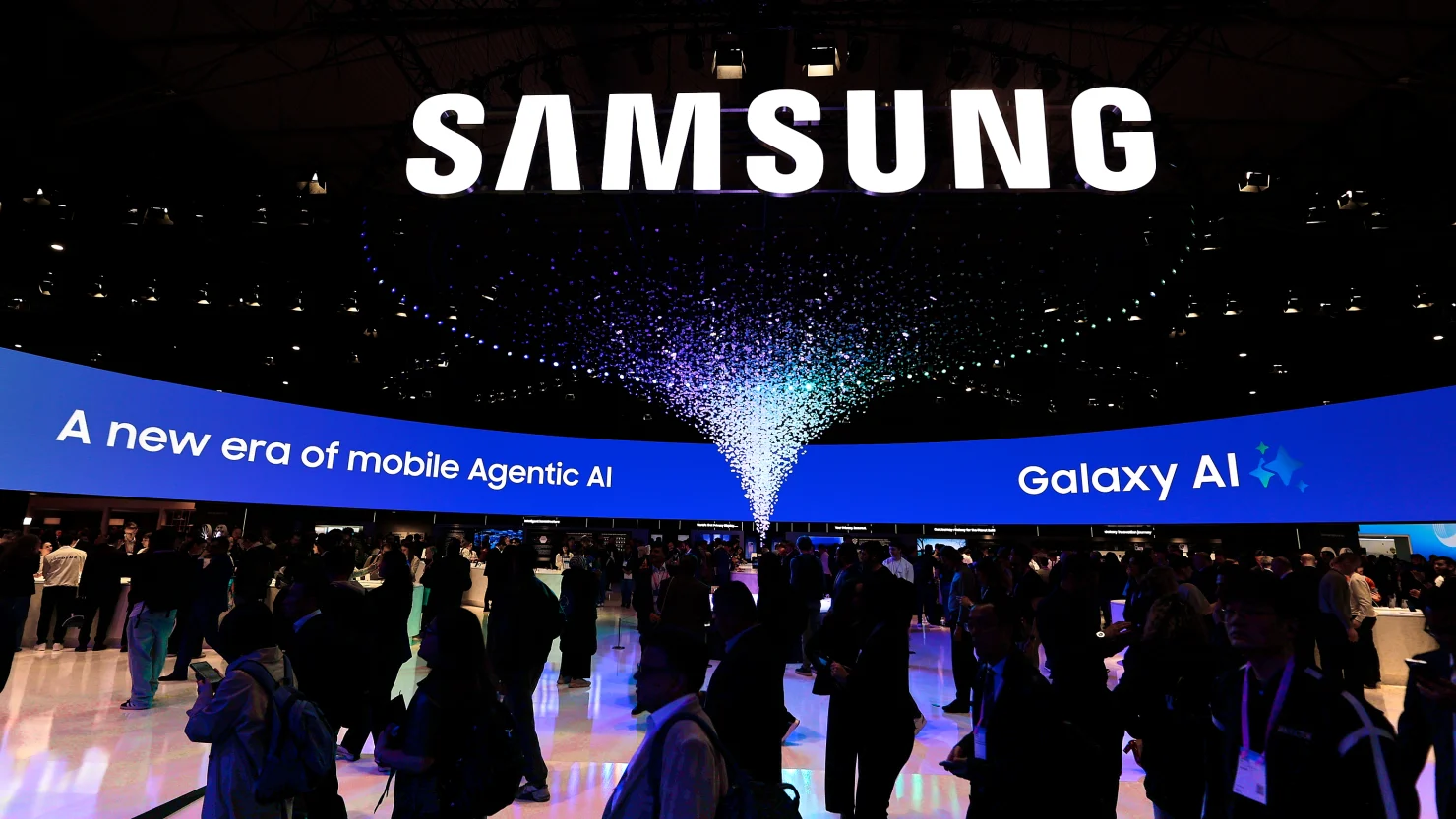


Samsung has disclosed initial specifications for its forthcoming AI smart glasses, confirming the wearable will feature camera technology and smartphone connectivity as it prepares to enter the competitive smart glasses market currently dominated by Meta.
Jay Kim, executive vice president within Samsung’s mobile division, revealed the specifications during Mobile World Congress in Barcelona.
Kim said the camera will be positioned at “eye level.” The eyewear transmits visual information to a connected smartphone, where AI computations occur.
The device, internally codenamed Project HAEAN, is slated for a 2026 market debut as Samsung’s inaugural smart eyewear offering. Kim stated that Samsung’s objective is “to have something for the industry this year.”
Recent reports indicate the product might incorporate an integrated display, marking a shift from initial display-less concepts. This represents a strategic pivot as Samsung positions the glasses between simple AI assistants and full augmented reality devices.
Kim also commented on broader market dynamics, noting that XR headsets will remain confined to speciality markets and won’t achieve widespread adoption comparable to what glasses might accomplish. This positions Samsung’s glasses as aimed at mass market appeal rather than niche technology enthusiasts.
Earlier reporting has suggested that at least one of the smart glasses models will feature a 12-megapixel camera, a 155mAh battery, and a Qualcomm AR1 chipset. The device is expected to include Wi-Fi and Bluetooth connectivity, but will not be able to connect to a mobile network independently, requiring pairing with a Samsung smartphone.
Rumours also point to transition lenses that automatically darken when exposed to sunlight, suggesting Samsung is designing the glasses for all-day wear rather than specific use cases.
WATCH MARKETING EDGE ONTV
The tech giant has partnered with Qualcomm and Google on development efforts beginning in 2023, with Gemini AI likely to play a crucial role in delivering features on the wearable device.
Meta’s collaboration with Ray-Ban commands an 82% share of the worldwide smart glasses sector, giving Samsung a clear competitive target. The Ray-Ban Meta glasses have gained traction through their combination of fashionable design, simplicity and relatively affordable pricing.
Samsung confirmed during its Q4 2025 earnings call in January that it would launch smart glasses in 2026. Seong Cho, executive vice president of Mobile Experiences, highlighted Samsung’s focus on delivering “multimodal AI experiences” through “next-generation AR glasses.”
The company has also partnered with renowned eyewear brands Gentle Monster and Warby Parker to ensure the glasses blend technology with fashionable designs. These collaborations aim to deliver designs that prioritise comfort, durability and aesthetics, addressing consumer concerns that previous smart glasses looked too obviously technological.
The glasses will integrate with Samsung smartphones, smartwatches and other connected devices within the Galaxy ecosystem. Users may receive notifications, control music playback or access navigation tools directly through the glasses, creating what Samsung describes as a streamlined and intuitive user experience.
Android XR serves as the underlying platform, providing access to Google services and the broader Android ecosystem. This contrasts with Meta’s approach, which centres on its own social platforms and Meta AI assistant.
WATCH MARKETING EDGE ONTV
Industry reporting suggests Samsung may develop more than one type of smart glasses. The 2026 model focuses on practical functionality without full AR displays, whilst a second-generation model expected in 2027 will feature AR displays, allowing users to overlay digital information directly onto real-world surroundings.
The 2027 version could enable applications such as navigation with real-time directions displayed in the user’s field of view, though Samsung has not officially confirmed specifications for that model.
Samsung’s entry comes as the smart glasses market prepares for significant expansion in 2026. Hundreds of brands showcased smart glasses at CES 2026 in January, whilst Google is also reportedly developing its own wearable despite collaborating with Samsung on Android XR. Apple is also exploring AR glasses, according to industry rumours.
The proliferation of players suggests the market is transitioning from early adoption to mainstream consideration, though actual sales figures remain modest compared to smartphones or traditional smartwatches.
For Samsung, the glasses represent an attempt to establish a presence in wearable AI before the category matures. The company already launched its Galaxy XR headset in 2025 but positioned that device for immersive experiences rather than everyday wear.
Whilst Samsung has not specified an exact launch date beyond the 2026 timeframe, Kim’s comments at Mobile World Congress suggest commercial availability for industry partners could arrive within months, with consumer availability potentially following later in the year.
The success of Samsung’s smart glasses will depend partly on execution but also on whether consumers prove willing to adopt face-worn technology beyond the niche that currently uses devices like Ray-Ban Meta. Samsung is betting that AI capabilities, ecosystem integration and fashionable design can expand that market significantly.




Comment
No comments found.