


Nigeria controls one of the most strategically positioned coastlines on the African continent, sits at the heart of the Gulf of Guinea, handles approximately 90 to 95 percent of its total trade volume by sea and is home to six major ports. Yet the country’s maritime sector remains chronically undervalued, poorly branded and persistently misrepresented in the minds of both domestic and international stakeholders.
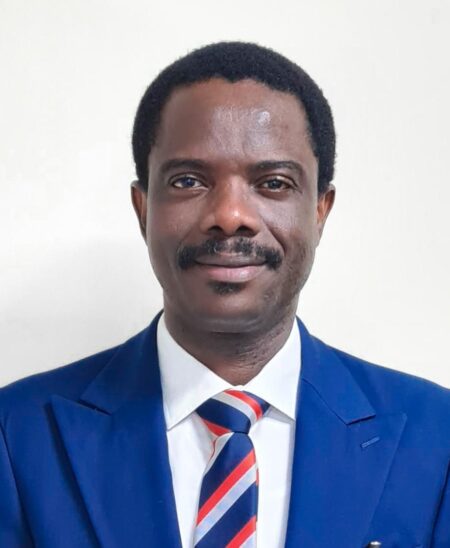
That was the central argument Osagie Eward, Head of public relations, Nigerian Maritime Administration and Safety Agency (NIMASA), placed before members of the Nigerian Institute of Public Relations (NIPR) Lagos state chapter at the association’s monthly PR Clinic held in Lagos.
The clinic, themed “Public Relations as a Catalyst for Transformation in Nigeria’s Maritime Sector,” provided a platform for Eward to make what amounted to a passionate and detailed case for why Nigeria’s communications professionals must urgently turn their attention and expertise toward one of the country’s most underdiscussed economic sectors.
His argument was not simply that the maritime sector needs better publicity. It was that the gap between what Nigeria’s maritime sector actually is and what the world believes it to be represents one of the most consequential perception failures in the country’s economic history.
“About 90 to 95 percent of Nigeria’s trade by volume is by sea,” Eward said, “and yet somehow our contribution is far below the potential.” He pointed to Nigeria’s extensive coastline, its six major ports and the enormous volume of shipping activity that already passes through Nigerian waters as evidence of a sector that is performing significantly below what its natural endowments should make possible. The problem, he argued, is not infrastructure alone.
It is perception. “We are doing very well since the concession of the ports. But out there, the perception is still that something is wrong with Nigeria. Something is wrong with them. It is the PR practitioners that need to step up to help brand this country and get this right.”
Eward’s presentation included the maritime security, an area where he argued Nigeria has made genuine and substantial progress that has gone almost entirely uncommunicated to the outside world. “The country’s maritime sector is quite safe. For over four years now there has been no issue of piracy. And yet the perception may not be right out there,” he said.
He described this as a classic case of reality failing to match perception not because the facts do not exist but because nobody is doing the work of communicating them strategically and consistently. “Nigeria is strategically located in the Atlantic Ocean. When you talk about the Gulf of Guinea, you are talking of Nigeria. All other countries look up to us. But the perception out there is of risky waters and insecure waters. Is it true? No. For four years we have not had a case of piracy in Nigeria. But nobody is doing the branding.”
Eward used the global success of December tourism in Nigeria, now widely known as Detty December, as proof of what deliberate perception management can achieve. “They just created something interesting and people will not stop traveling. Our brothers and sisters from Europe and the United States all want to come for Detty December. We have created something in the minds of people. We have given it a brand and they are rushing down.”
He contrasted this with the maritime sector’s coastline, which he described as a permanent and irremovable asset that could anchor Nigeria’s tourism industry in a way no entertainment event could match. “Unlike entertainment, we have the coastline. Nobody can take it away. If we are able to create the right perception, Nigeria will be the destination for coastal tourism.”
He identified several specific economic opportunities within the maritime sector that he said remain almost entirely off the radar of public consciousness. These include inland fisheries, shipbreaking, which he described as a potentially enormous industry given Nigeria’s affordable labour and strategic location, and the export of seafarers. On the latter, he pointed to the Philippines as a model Nigeria should study and replicate.
“There is one country in the Philippines, that trains amazing young people to work on board vessels. We have a youthful population in Nigeria of over 200 million people with over 67 percent youth. If we can make Nigeria the most exporting country of seafarers for the whole world, it is just for us to create the perception and the world will turn to Nigeria for that.”
He called on PR practitioners to move beyond reactive, after-thought communications and embrace a more strategic and proactive role in the sector’s transformation. “PR should not be reactive. We just sit down and then do things as afterthoughts. We have to be the drivers. We do strategic campaigns every day. I know we have excelled in the consumer industry and the food industry. It is time to bring those skills to the maritime sector.”
He was specific about what this looks like in practice, calling for narrative repositioning that shifts the sector’s public image from liability to strategic opportunity, stakeholder alignment that unites government, investors and communities behind a single vision, and deliberate trust building across all audiences.
He closed with a challenge that was direct and urgent. “Let us change the story about Nigeria in the maritime sector from that of a problematic sector with existing security and efficiency concerns, which are not true, to Africa’s strategic maritime gateway. Let us attract investment through PR. Perception will not wait for potential. We have to close that gap now.”


Comment
No comments found.