



Mother’s Day fell on March 15, 2026, and Nigerian brands showed up with campaigns ranging from perfunctory “Happy Mother’s Day” posts to sophisticated multi-channel strategies demonstrating genuine cultural understanding. The difference between brands that simply participated and brands that created memorable moments came down to a simple question: Did you celebrate mothers, or did you celebrate Nigerian mothers?
The distinction matters commercially. Generic Mother’s Day content generates polite engagement and disappears within hours. Culturally specific executions that capture the particular dynamics of Nigerian motherhood, the scrutiny over clothing choices, the apologies disguised as food, the strength wrapped in sacrifice, create conversation, shares, and brand recall that extends weeks beyond the calendar event.
Several brands understood this assignment completely. Chicken Republic deployed a multi-post narrative journey that moved from emotion to transaction to humour. Access Bank invested in premium visual storytelling, positioning the brand as sophisticated and emotionally intelligent. Power Oil went bold with a billboard capturing Nigerian maternal communication in seven words. UBA leveraged Mother’s Day to reinforce its gen.ue platform rather than treating it as isolated content. Dano seamlessly connected product benefits to motherhood. Wema Bank created a financial metaphor that felt authentic rather than forced. Milo aligned brand values with maternal energy without generic platitudes.
The campaigns reveal strategic maturity in how Nigerian brands approach calendar marketing. The winning executions didn’t just acknowledge Mother’s Day. They used the moment to advance brand positioning, demonstrate cultural fluency, and create content worth remembering beyond the obligatory scroll.
Chicken Republic: When one post isn’t enough
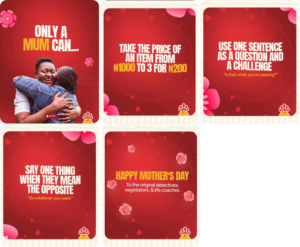
Chicken Republic deployed what most brands avoid: a multi-post Mother’s Day campaign that created narrative progression across the day. The strategy reflected confidence that the content would hold audience attention through multiple touchpoints rather than exhausting goodwill with a single post.
The opening salvo established emotional territory with “Only a Mum Can…” paired with authentic imagery of Nigerian mothers and daughters embracing. The creative avoided stock photo aesthetics, using real moments that felt culturally grounded. The heart-shaped frame and pink florals hit Mother’s Day visual cues without overwhelming the genuine emotion.
The second post shifted to transaction: “Take the price of an item from ₦1000 to 3 for ₦200.” The promotion created immediate commercial utility, transforming sentiment into foot traffic. Brands often separate emotional content from promotional messaging, fearing the latter undermines the former. Chicken Republic recognised that mothers appreciate practical value as much as abstract celebration, and the transition felt natural rather than cynical.
The third and fourth posts delivered cultural specificity that separated this campaign from generic Mother’s Day content across markets. “Use one sentence as a a=question and a challenge: ‘Is that what you’re wearing?’” captures the Nigerian maternal communication style where concern manifests as scrutiny, and love expresses through standards enforcement. Every Nigerian who has prepared to leave the house understands this sentence carries layers beyond the literal words.
The follow-up – “Say one thing when they mean the opposite: ‘Do whatever you want’”, doubled down on the insight. Nigerian mothers deploy this phrase as the verbal equivalent of a final warning, not permission. The execution demonstrated understanding that Nigerian motherhood operates through specific linguistic and behavioural patterns that differ from Western maternal archetypes dominating global Mother’s Day content.
The final creative showed roses with the straightforward message: “Happy Mother’s Day. To the original detectives, negotiators, and life coaches.” This repositioned common maternal functions through a lens that acknowledged the skill and strategy involved rather than romanticizing sacrifice alone.
The multi-post strategy worked because each piece served a distinct purpose while building cumulative impact. Emotion established resonance. Transaction created action. Cultural specificity generated conversation. The closing message provided a satisfying conclusion. Brands treating Mother’s Day as a single-post obligation leave engagement on the table. Chicken Republic demonstrated how calendar moments support sustained narrative when executed with strategic intent.
Access Bank: When premium execution elevates the message
Access Bank’s Mother’s Day creative reflected investment in production quality that separated it from standard social media content. The silhouette visual, a mother and child rendered in warm orange and yellow gradients against a sunset backdrop, created a premium aesthetic that positioned the brand as sophisticated rather than transactional.
The copy demonstrated unusual emotional intelligence for bank marketing: “Behind every milestone, every lesson. And every moment of growth is the unwavering presence of a mother. Her love teaches us compassion, her strength teaches us resilience, and her sacrifices remind us of what it truly means to care for others.”
The language avoided both corporate jargon and saccharine sentiment, threading the needle toward genuine recognition. “Unwavering presence” acknowledges constancy without reducing mothers to background fixtures. “Her love teaches us compassion” frames maternal influence as active instruction rather than passive modelling. “Her sacrifices remind us of what it truly means to care for others” acknowledges the cost without wallowing in martyrdom.
The closing line, “Today, we honour the incredible women whose impact reaches far beyond what words can express” contained strategic humility. Banks often overreach in emotional territory, claiming connection to family moments that feel presumptuous. Access Bank acknowledged the limits of language and institutional authority while still claiming space to participate in the conversation.
The visual execution mattered as much as the copy. The silhouette approach avoided the challenge of representing specific mothers while maintaining emotional connection. The warm colour palette evoked comfort and warmth without defaulting to pink or red, which dominate Mother’s Day aesthetics. The composition felt considered rather than assembled from stock libraries.
For banks competing on undifferentiated products and similar digital capabilities, brand perception becomes the decisive factor. Access Bank’s Mother’s Day execution positioned the institution as emotionally intelligent, design-conscious, and worthy of trust with financial matters that ultimately serve family wellbeing. The connection between motherhood and financial security is natural, but executing it without feeling exploitative requires the restraint Access demonstrated.

Power Oil: Seven words that captured Nigerian motherhood
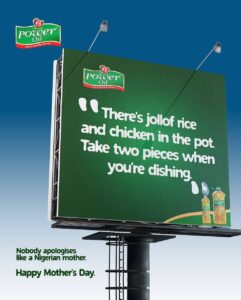
Power Oil deployed a billboard, an increasingly rare choice when brands default to digital, with seven words that demonstrated perfect cultural insight: “Nobody apologises like a Nigerian mother.”
The execution paired this headline with a larger billboard message: “There’s jollof rice and chicken in the pot. Take two pieces when you’re dishing.” The combination captured a specific dynamic where Nigerian mothers express remorse, affection, or reconciliation through food rather than verbal apology. The act of cooking a favourite meal communicates what direct apology might not, and the specification of “two pieces” signals genuine care and abundance.
The creative works because it acknowledges behaviour patterns specific to Nigerian family dynamics. Western Mother’s Day campaigns emphasise verbal affirmation, cards, and explicit emotional expression. Nigerian mothers often communicate through provision, sacrifice, and actions that demonstrate care more than words declare it. Power Oil recognised this cultural difference and built creative around authentic behaviour rather than imported archetypes.
The billboard placement matters strategically. Digital content reaches audiences already scrolling, often in private contexts. Billboards create public conversation, generate social media shares through photographs, and signal brand investment in high-visibility real estate. The choice to go big with a culturally specific message rather than be safe with generic sentiment demonstrates confidence in the insight’s resonance.
The product’s connection to cooking oil made the message authentic rather than opportunistic. Power Oil’s brand promise centres on enabling healthy families through quality cooking. The Mother’s Day execution extended this positioning by celebrating how Nigerian mothers use food as a love language. The alignment between product utility and cultural insight created credibility.
Brands often struggle with how to be culturally specific without stereotyping. Power Oil navigated this by celebrating a positive behavioural pattern rather than mocking or reducing Nigerian mothers to caricature. The tone conveyed affection and recognition rather than judgment.
UBA: Platform building disguised as calendar marketing
UBA’s Mother’s Day creative carried a strategic element most brands missed: the prominent gen.ue branding indicating this wasn’t just Mother’s Day content but part of the bank’s ongoing platform celebrating evolved women.
The visual showed a mother holding an infant with copy reading: “Loving, protecting, caring, that’s what mothers do!” The execution connected to UBA’s “it’s all about U” tagline, creating thematic coherence between Mother’s Day messaging and broader brand positioning.
This represents sophisticated marketing thinking. Most brands treat calendar events as isolated content opportunities unconnected to ongoing strategy. UBA recognised that Mother’s Day provides natural reinforcement for gen.ue’s core thesis that women, particularly mothers, deserve recognition, respect, and institutional support.
The gen.ue platform launched as UBA’s answer to female-focused banking, acknowledging that women’s financial needs, communication preferences, and life circumstances differ from men’s. Mother’s Day content supporting this platform strengthens long-term brand equity rather than generating temporary engagement that disappears by March 10.
The visual execution demonstrated quality production values with professional photography, clean design, and the distinctive triangular UBA brand element integrated naturally. The aesthetic felt premium without excessive polish that might alienate the mass market mothers, the message celebrated.
For banks, differentiation beyond product features increasingly depends on values alignment and cultural positioning. UBA’s decision to build sustained platforms like gen.ue rather than reactive campaign-by-campaign approaches creates a competitive advantage through accumulated brand meaning. Each Mother’s Day, International Women’s Day, or moment celebrating female achievement reinforces gen.ue rather than starting fresh.

Dano: Product integration without forcing it
Dano’s creative achieved the difficult balance of connecting product benefits to Mother’s Day without feeling mercenary. The visual showed a mother embraced by two children against a red background with the headline: “Love in its most nourishing form.”
The word “nourishing” carried the entire strategic weight. Dano sells powdered milk, a product fundamentally about nutrition and nourishment. Mothers provide emotional and physical nourishment. The connection is natural, but executing it without seeming exploitative requires restraint Dano demonstrated.
The visual reinforced the message through authentic representation. The mother and children appeared genuinely joyful rather than performing for cameras. The composition placed the embrace centrally, with product branding present but not dominance. The Dano cup positioned at bottom right provided brand presence without overwhelming the emotional content.
The red background created visual consistency with the brand’s colour palette while fitting Mother’s Day aesthetics. The warm tone evoked comfort and family connection without defaulting to pink that many brands overuse for maternal content.
For FMCG brands, the challenge with calendar marketing is avoiding the perception that every holiday exists primarily to sell products. Dano succeeded by leading with genuine celebration and allowing product connection to emerge through thematic alignment rather than hard selling. The creative never mentions buying Dano, trying Dano, or switching to Dano. It simply positions the brand alongside maternal love through shared association with nourishment.
This approach builds long-term brand affinity more effectively than promotional messaging. Consumers encountering Dano on shelves post-Mothers’ Day carry subconscious associations between the brand and maternal care, even if they can’t consciously recall the specific creative. The emotional connection influences purchase decisions without activating resistance that explicit sales messages trigger.

Wema Bank and Milo: Solid execution worth noting
Wema Bank deployed clean visual design with a creative showing mother and child silhouettes across a gradient background. The copy, “We honour the women whose care builds generations. Your love is the first investment that never fails” created a financial metaphor that felt authentic rather than forced.
The “investment” language connected to Wema’s banking services while acknowledging that maternal investment delivers returns through children’s development and family strength. The phrase “never fails” provided reassurance and certainty, qualities banks seek to project. The execution demonstrated how financial institutions can participate in emotional moments by drawing natural connections between their services and family wellbeing.

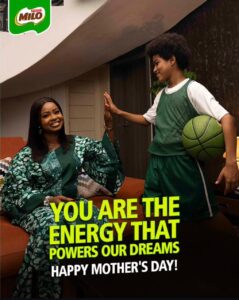
Milo positioned mothers as “the energy that powers our dreams,” creating direct alignment between product benefits and maternal role. Milo’s brand centers on energy, vitality, and achievement. The Mother’s Day creative extended this by crediting mothers as the foundational energy source enabling children’s aspirations. The visual showed a mother and teenage son in matching green, with the son in basketball gear suggesting athletic achievement Milo supports through nutrition.
Both executions represented competent Mother’s Day marketing: culturally appropriate, visually professional, strategically aligned with brand positioning, and emotionally resonant without manipulation.
What separates memorable from forgettable
The Mother’s Day campaigns that generated conversation and lasting impact shared several characteristics worth noting for brands planning future calendar marketing.
Cultural specificity beats universal sentiment. Power Oil’s “Nobody apologises like a Nigerian mother” and Chicken Republic’s “Is that what you’re wearing?” resonated because they captured behaviour patterns specific to Nigerian family dynamics. Generic “mothers are heroes” messaging could apply anywhere, which means it creates minimal distinctive brand association.
Multi-post strategies create sustained engagement. Chicken Republic’s decision to deploy several creatives across the day rather than single obligatory post demonstrated confidence in content quality and understanding that narrative progression holds attention better than isolated moments.
Premium execution signals brand seriousness. Access Bank’s sophisticated visual design and emotionally intelligent copy positioned the brand as worthy of trust with important financial matters. Brands cutting corners on Mother’s Day creative signal that they view the occasion as checkbox compliance rather than genuine engagement opportunity.
Strategic alignment matters more than participation. UBA’s integration of Mother’s Day into the gen.ue platform created long-term value beyond temporary engagement. Brands treating calendar events as isolated opportunities miss the chance to reinforce ongoing positioning.
Product connection should feel natural, not forced. Dano’s “nourishing” language created authentic bridge between milk products and maternal care. Brands contorting messages to justify product placement undermine both the celebration and the commercial objective.
The Mother’s Day 2026 campaigns demonstrated growing sophistication in Nigerian marketing. The winning brands didn’t just acknowledge the calendar. They used the moment to demonstrate cultural understanding, advance strategic positioning, and create content worth remembering. For brands planning future calendar marketing, the lesson is clear: participation is easy, but resonance requires understanding the specific cultural context where your brand operates and having the courage to be distinctive rather than safe.
ALSO WATCH MARKETING EDGE ONTV




Comment
No comments found.