
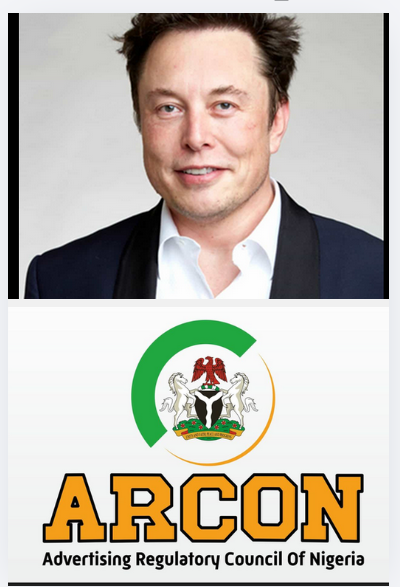


A policy that many in Nigeria’s advertising industry had long considered settled has suddenly returned to the centre of global conversation after a social media reaction from Elon Musk.
For several years, the directive issued by the Advertising Regulatory Council of Nigeria requiring advertisements targeted at the Nigerian market to feature Nigerian models and voice-over artists had largely faded from daily debate. The industry argued about it when it first emerged; however, over time, practitioners adjusted, businesses adapted, and the conversation gradually cooled.
Then, unexpectedly, the issue resurfaced. Musk reignited the discussion after reacting on the social media platform X to a post claiming that Nigeria had become the first country to ban white and British models in advertising.
ALSO WATCH:NITE OF TRIBUTES
His brief response, a simple “hmm”, immediately drew global attention. His brief reaction, a single “hmm,” drew over 12 million views within 48 hours, sparking international debate. Within hours, the post travelled rapidly across social media, eventually attracting millions of views and triggering heated reactions from international users who framed the Nigerian policy as racial discrimination.
However, almost immediately, Nigerians began pushing back.
Many users stepped into the conversation to correct what they described as a misleading narrative. Among them was Nigerian X user IamEriOluwa, who replied directly to Musk, stating that the policy was widely misunderstood.
“No, Nigeria did not ban only white models,” the user wrote. “The policy prohibits the use of foreign models and voice-over artists in advertisements targeted at the Nigerian market, regardless of race or ethnicity. They are simply saying: use Nigerians to sell to Nigerians.”
Similarly, social commentator Daniel Regha also weighed in, emphasising that the directive was designed to strengthen opportunities for local talent.
ALSO WATCH:QUARTERLY SUMMIT
“Elon, context matters,” Regha wrote. “While there have been mixed reactions among Nigerians, the intention is to increase opportunities for Nigerians to secure these jobs and promote local talent within the advertising industry.”
Another respondent on the platform, identified as @whitenigerian, also supported the directive, arguing that the reform was a step toward strengthening the domestic creative economy.
“I love this development,” the user wrote. “We don’t need foreign solutions to our local problems. Nigerian for Nigeria.”
Yet, beyond the online reactions, industry observers say the renewed debate raises an interesting question: why has a policy introduced years ago suddenly become global news?
The directive itself is not new. The advertising regulator announced the measure on August 22, 2022, restricting the use of foreign models and voice-over artists in advertisements created for the Nigerian market, with enforcement beginning October 1 of the same year. At the time, the policy sparked intense debate within Nigeria’s integrated marketing communications sector. Talent managers, advertising agencies, and creative professionals initially expressed both support and concern.
ALSO WATCH:MARKETING EDGE ONTV
Nevertheless, as months passed, the controversy gradually subsided. Businesses adapted their advertising strategies, Nigerian creatives gained more visibility in campaigns, and the industry largely moved forward.
Now, however, Musk’s social media reaction has revived a discussion that many practitioners believed had already run its course.
Consequently, what once appeared to be a local regulatory reform has suddenly evolved into a global talking point. And as the debate continues online, many Nigerian voices insist that the policy should be understood not as a racial restriction but as a deliberate strategy to strengthen the country’s creative economy and expand opportunities for local professionals in advertising.



Comment
No comments found.