
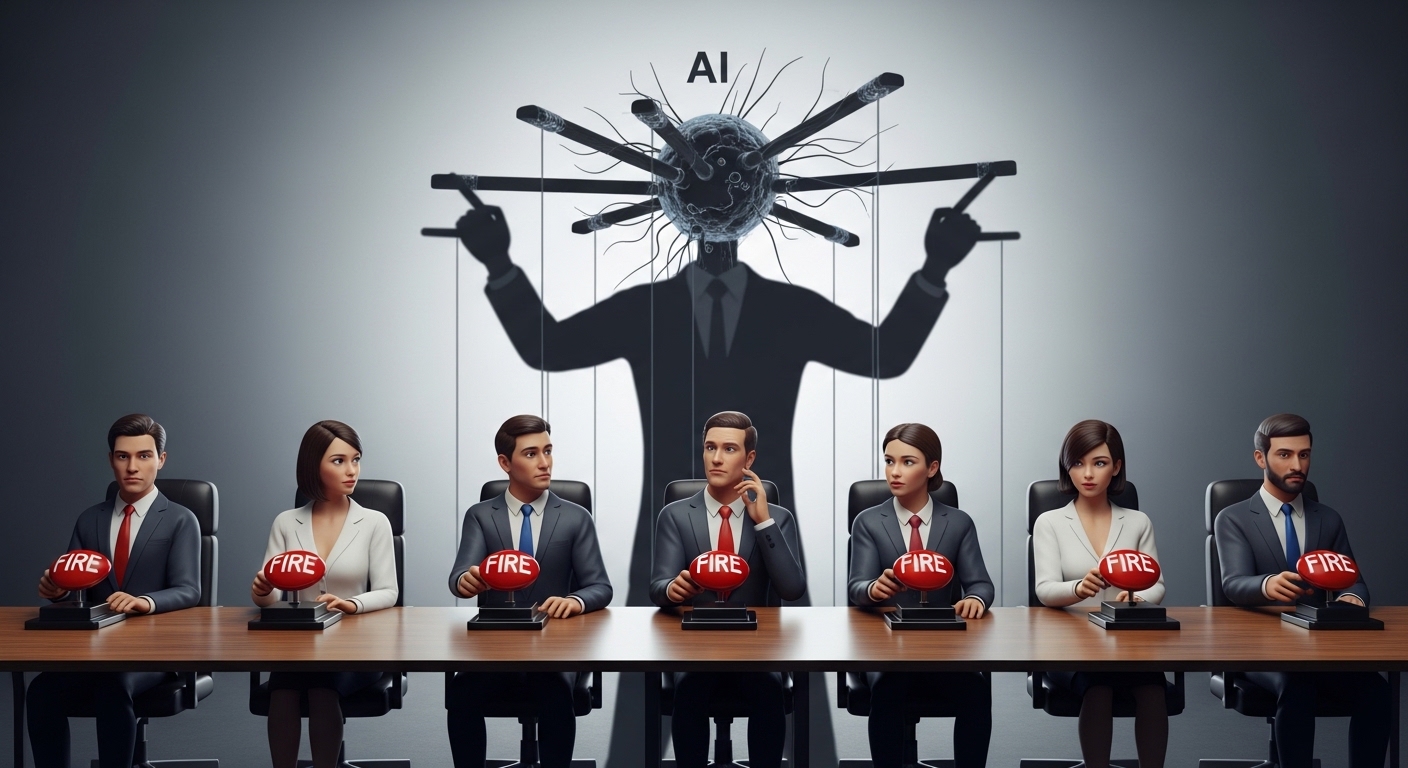


Over 78,000 tech workers lost jobs in the quarter of 2026, with 48 per cent of cuts directly attributed to AI and automation. The dismissals occurred whilst McKinsey researchers projected that AI could automate 30 per cent of work activities across the global economy by 2030, and Goldman Sachs estimated that 300 million full-time jobs worldwide face exposure to AI displacement. The contradiction isn’t subtle: companies are systematically eliminating the income streams that fund the consumption their businesses depend on.
Jamie Dimon, CEP of JPMorgan Chase, compared AI’s impact to electricity or the printing press, whilst openly warning that entire job categories will be eliminated. In the February event, Dimon urged businesses and governments to “contemplate your options now for the disruption AI will bring,” acknowledging JPMorgan already has 150,000 employees using large language models weekly and that automation “might lead to a decrease in staffing requirements over the next five years.”
Dimon even raised the spectre of self-driving lorries being rolled out suddenly, displacing millions of workers at once and provoking social upheaval. The subtext is that AI will be used to eliminate vast layers of office, clerical, engineering, and support jobs, and the ruling class is preparing to press forward with this process while managing consequences.
The economics are perverse. Each company makes an individually rational decision to cut costs through AI automation. Collectively, those decisions reduce aggregate demand that sustains the entire consumer economy. It’s a prisoner’s dilemma at a civilisational scale, and nobody can defect without losing competitive position.
Block CEO Jack Dorsey cut the company’s headcount nearly in half, from 10,000 to fewer than 6,000, stating in a shareholder letter that “intelligence tools have changed what it means to build and run a company.” Internal accounts from Block workers confirm that management warned engineers that productivity targets would rise as AI tools rolled out, and that whole teams would shrink from eight engineers to just one.
The layoffs delivered exactly what shareholders demanded. Block’s stock price rose on the announcement. Competitors took notice. The message: fire workers, deploy AI, watch stock climb. The incentive structure rewards short-term margin expansion whilst ignoring long-term demand destruction.
Marc Cenedella, CEO of jobs platform Ladders, warned that “when things crystallise like this, it brings out pitchforks and torches. People are angry at the destabilising impact that AI is inevitably going to have on our economy and work life.” The anger is rational. Workers understand that individual companies can’t stop the automation wave without surrendering competitive advantage, but that collective result is an economy-wide income collapse.
For Nigerian business leaders watching this unfold, the implications are immediate. First, the AI-driven layoff wave hitting Western tech companies will cascade into developing economies through reduced outsourcing, collapsed consumption of exported goods, and eventual automation of roles Nigerian workers currently perform remotely for foreign companies.
Second, the “AI washing” phenomenon, companies blaming AI for layoffs they’d make anyway, creates a measurement problem that obscures genuine automation impact. Sam Altman acknowledged: “There’s some AI washing where people are blaming AI for layoffs that they would otherwise do, and then there’s some real displacement by AI of different kinds of jobs.”
The distinction matters because it determines the timeline and severity of economic impact. If most 2026 layoffs are AI washing covering standard restructuring, the real AI displacement wave hasn’t started yet. If a substantial portion represents genuine automation, the economic damage is already accumulating whilst policymakers debate what might happen.
Stanford researchers estimate 42,000 jobs per month could be lost to AI automation. The displacement isn’t evenly distributed. Computer programmers sit atop the exposure list, followed by customer service representatives and data entry workers. Workers in their twenties entering AI-exposed occupations saw unemployment rise nearly 3 per cent in the first half of 2025.
The competitive trap explains why individual CEO knowledge about macroeconomic consequences doesn’t prevent micro-level decisions that create those consequences. Atlassian CEO Mike Cannon-Brookes articulated logic: “It would be disingenuous to pretend AI doesn’t change the mix of skills we need or the number of roles required in certain areas. It does.”
That acknowledgement, that AI changes both the type and number of required roles, represents a permanent reduction in labour demand, not a temporary adjustment. Companies that don’t automate lose a cost advantage to competitors who do. Shareholders punish companies maintaining higher headcounts when AI alternatives exist. The competitive pressure is unidirectional: automate or die.
Meta illustrates the contradiction perfectly. Company reportedly planning to lay off 20 per cent of workforce whilst simultaneously committing $600 billion to build data centres and recruit top AI researchers. The workers being let go aren’t being replaced by AI today. They’re subsidising AI bets their employer is making on a future where even fewer workers will be needed.
The economic logic breaks down when aggregated. Consumer spending represents roughly 70 per cent of GDP in developed economies. Systematically eliminating jobs that fund that spending whilst expecting consumption to remain constant is a mathematical impossibility. Yet each company optimises for its own survival rather than system stability.
Goldman Sachs research projects that if AI were deployed across the economy for everything it could currently do, roughly 2.5 per cent of U.S. employment would face immediate job loss risk. That’s a 2025 estimate. By 2030, McKinsey projects 30 per cent exposure. The trajectory is exponential, not linear. And the timeline keeps compressing as AI capabilities improve faster than labour markets can adjust.
The counterargument from labour economists is that historical technology transitions consistently created more jobs than they destroyed. But AI researchers note that speed and breadth of AI capability improvement is unprecedented, and historical patterns may not hold when technology is being deployed, as it can learn and improve faster than workers it displaces.
IBM tripled entry-level hiring in 2026, arguing that while AI can do many entry-level jobs, it still needs a human touch. More importantly, cutting entry-level jobs delivers short-term savings but erases the pipeline needed to train future experienced workers and mid-level managers. That strategic myopia compounds the economic damage.
For Nigerian marketers and business strategists, the question isn’t whether AI-driven displacement will happen. The question is whether consumption-based business models remain viable when a substantial portion of consumers loses income streams that fund purchases. Brands optimising for 2026 consumer behaviour may be building strategies for an economy that won’t exist in 2030.
Every CEO knows this. They know that the collective result of individual automation decisions is demand destruction that threatens the businesses they’re trying to protect. They know that eliminating consumers faster than creating new revenue sources is a path to economic collapse. They know that the prisoner’s dilemma has no happy ending when every player defects simultaneously.
But knowing doesn’t change the incentive structure. The CEO who refuses to automate, whilst competitors do, gets replaced by the board demanding cost cuts. The company that maintains headcount whilst rivals deploy AI loses margin advantage and eventually market position. The rational individual decision remains automated regardless of the irrational collective outcome.
Nobody can stop it because stopping requires coordinated action that competitive markets prevent. The economy is running an experiment testing whether technological displacement can happen faster than economic adaptation. Every CEO knows the answer. They’re automating anyway because the alternative is personal obsolescence before economic collapse arrives.
ALSO WATCH:MARKETING EDGE ONTV




Comment
No comments found.