
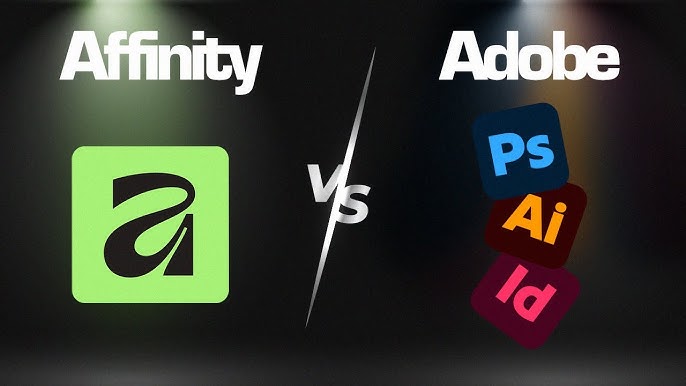


For years, Adobe not only dominated creative software but also defined it. Photoshop files have evolved into a professional lexicon. Illustrator and InDesign were not merely instruments but rather anticipations. Engaging in design, advertising, publishing, or media often meant working within Adobe’s ecosystem.
A more subdued adversary, rather than a vocal one, currently challenges this dominance. Affinity, the design suite from Serif, has consistently built itself as the most genuine rival to Adobe’s creative dominance. The recent choice to offer its tools, Photo, Designer, and Publisher, at no cost for a short time marks a key turning point, not only for designers but also for the creative economy as a whole.
This is not just a price war. It is a value contest.
How Adobe Became Untouchable
Adobe built its dominance over decades, not all at once. Prior to the advent of subscriptions, the company integrated itself into creative educations, agency operations, publishing firms, and production processes. File formats evolved into standards. Skills become transportable just within the ecosystem. Entire businesses have become dependent on Adobe software, making exit both costly and hard.
Adobe moved to a subscription-only business from a place of near-complete market dominance. Large agencies and firms paid the cost. For freelancers, students, independent studios, and creatives in developing markets, it has become an increasing cause of stress. Still, few left. The cost of switching appeared greater than the cost of remaining.
Affinity’s Strategy: Not Disruption, But Relief
Affinity did not arrive claiming to “kill” Adobe. Instead, it focused on what many creatives believed they had lost: control. Initially, Affinity’s draw came from several clear ideas: fast, pro-level tools; a one-time pay model; no forced cloud use; and speed that worked well on basic gear. The software acquired a name quietly, especially among independent designers and illustrators.
Making the suite free for a time is not just a kind act. This move is a smart plan to remove the last mental block: doubt. Once creatives build a workflow, habit develops. Habit determines loyalty more than qualities.
The Cracks in a Monopoly
Adobe remains firmly established. It continues to prevail in enterprise contracts, collaborative production settings, and sectors where interoperability is crucial. However, monopolies, including those that are less overt, attract examination.
Increasing subscription expenses, intricate license agreements, dependence on cloud services, and apprehensions regarding AI training openness have progressively altered perceptions. Adobe is now regarded by numerous creatives not merely as a toolmaker, but as a gatekeeper.
In contrast, Affinity emerges as the antithesis: a toolmaker that refrains from interference.
The distinction is significant. In a time when creators are scrutinizing platforms that derive greater value than they provide, software companies are evaluated beyond mere functionality. They are evaluated based on posture.
Why This Moment Matters
The genuine conflict is not occurring in boardrooms; it is taking place in schools, bedrooms, collaborative workspaces, and small studios.
If pupils acquire knowledge of Affinity prior to Adobe, the defaults start to change. When independent creatives establish careers devoid of subscriptions, the expectations transform. As agencies adopt a more tool-agonistic approach, monopolies diminish.
Adobe’s foremost strength, its status as the industry standard, is simultaneously its most significant weakness. Standards are only upheld if the subsequent generation embraces them.
What Comes Next
This is improbable to conclude with the winner-takes it-all result. Adobe will maintain its dominance, particularly at scale. However, its status is no longer uncontested, and that fact is noteworthy.
Affinity need to supplant Adobe achieve success. It merely needs to exist convincingly, as evidence that creative endeavors do not necessitate perpetual rental.
This extends beyond a mere software narrative. This indicates a larger trend of produces redefining their influence in relation to the platforms they rely upon.
Quietly, Deliberately. Moreover, for the first time in an extended period, there are genuine options.
ALSO WATCH MARKETING EDGE ONTV


Comment
No comments found.