
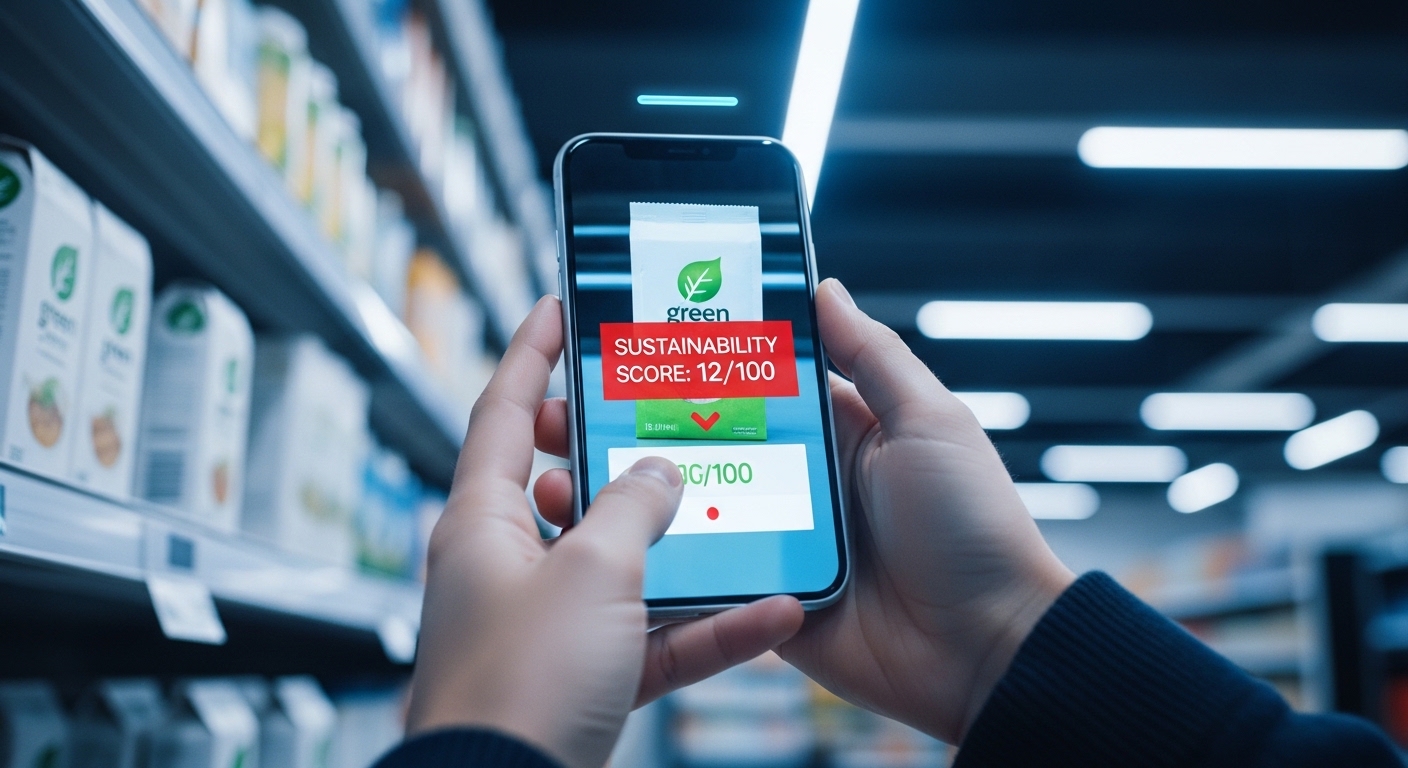


Seventy-seven per cent of consumers claim they would stop supporting brands guilty of greenwashing. Ninety-one per cent believe at least some brands engage in misleading environmental claims. Seventy-three per cent say they prefer sustainable brands.
Then they buy the greenwashed product anyway.
This is sustainability marketing’s defining paradox in 2026: consumers express passionate environmental values whilst demonstrating purchasing behaviour that contradicts those values almost completely. The gap between stated sustainability priorities and actual buying decisions has become so wide that the entire premise of green marketing, that environmental claims drive purchase behaviour, deserves re-examination.
Research published in January 2026 reveals greenwashing still works. Even consumers who identify as “high environmentalists” fall into the trap. They express scepticism about environmental claims, recognise greenwashing when it’s pointed out, and consider it problematic. Then they purchase products with unverified sustainability messaging at rates statistically indistinguishable from consumers who don’t care about the environment at all.
The mechanism is psychological, not rational. Sustainability claims activate emotional responses tied to identity and values. Consumers want to see themselves as environmentally conscious. Purchasing products with green messaging, regardless of their authenticity, provides that identity reinforcement. The actual environmental impact becomes secondary to the psychological benefit of feeling like someone who cares.
“Greenwashing still works in convincing consumers they are getting a more environmentally friendly product than they actually are, and every consumer is vulnerable,” concludes research from the University of Colorado examining consumer perceptions across multiple product categories.
This creates perverse incentives. Brands making genuine sustainability investments compete against brands simply printing green claims on packaging. Both approaches influence purchase behaviour. But the greenwashing approach costs dramatically less whilst delivering similar revenue outcomes, at least until consumers discover the deception.
The discovery risk is real. Fifty-four per cent of UK consumers are prepared to boycott brands over misleading green claims, with almost one in five having already changed purchasing decisions due to greenwashing. Fashion brands and oil companies face particular scrutiny, with 57-58 per cent of consumers identifying these sectors as most likely to engage in deceptive environmental marketing.
Yet even awareness doesn’t prevent deception’s effectiveness. Studies across markets from Colombia to Greece demonstrate that greenwashing positively influences purchase intention even amongst consumers who report great environmental concern. The psychological trigger, green imagery, sustainability language, and eco-friendly packaging, drive behaviour independently of whether the underlying claims withstand scrutiny.
For Nigerian brands navigating sustainability messaging, this paradox creates strategic complexity. Genuine environmental investments require capital, operational changes, and supply chain transformation. Greenwashing requires creative design and marketing copy. Both approaches capture environmentally conscious consumers. But only one builds long-term credibility.
The regulatory environment is tightening. EU directives scheduled for implementation in 2026-2027 will strengthen enforcement against misleading environmental claims. Repeat offender rates for greenwashing stand at 39 per cent for European companies compared to 30 per cent globally, suggesting regulatory pressure drives behavioural change when enforcement becomes serious.
The reputational calculus is shifting as well. Whilst greenwashing works tactically, driving immediate purchase behaviour, it destroys trust strategically when discovered. Research demonstrates that greenwashing perception negatively impacts consumer trust, brand loyalty, and purchase intention over time. The fashion industry shows stronger negative effects than the food sector, suggesting category-specific vulnerabilities.
Forty-four per cent of global consumers report wanting to make eco-friendly choices but feeling uninformed about how purchases impact the environment. This information gap is where brands can build a competitive advantage through transparent communication. Not vague sustainability claims, but specific, verifiable information about environmental impact.
The difference matters. McKinsey’s analysis of US sales data covering $400 billion in retail revenue found that products making multiple verified ESG-related claims grew faster than those making single claims or no claims at all. But verification is critical. Claims must be backed by genuine actions that create measurable environmental impact.
The strategy emerges clearly: transparency beats greenwashing over time, even though greenwashing works tactically. Brands investing in actual sustainability whilst communicating that investment clearly and specifically will capture consumers willing to pay premium prices, 60 per cent of Millennials and 59 per cent of Gen Z according to recent surveys, whilst building trust that survives regulatory scrutiny and consumer scepticism.
The alternative, relying on psychological triggers without substance, works until it doesn’t. And when trust collapses, recovery becomes impossible. Consumers remember being deceived. They might forgive mediocre products. They rarely forgive brands that manipulate their values.
Sustainability plays with consumers’ minds because consumers want to believe. They want purchasing decisions to reflect environmental values. Brands can exploit that desire through deceptive claims, or honour it through genuine action clearly communicated. The first approach drives short-term sales. The second builds businesses that survive when sustainability stops being marketing performance and becomes a regulatory requirement.
Seventy-seven per cent of consumers claim they would stop supporting brands guilty of greenwashing. Ninety-one per cent believe at least some brands engage in misleading environmental claims. Seventy-three per cent say they prefer sustainable brands.
Then they buy the greenwashed product anyway.
This is sustainability marketing’s defining paradox in 2026: consumers express passionate environmental values whilst demonstrating purchasing behaviour that contradicts those values almost completely. The gap between stated sustainability priorities and actual buying decisions has become so wide that the entire premise of green marketing, that environmental claims drive purchase behaviour, deserves re-examination.
Research published in January 2026 reveals greenwashing still works. Even consumers who identify as “high environmentalists” fall into the trap. They express scepticism about environmental claims, recognise greenwashing when it’s pointed out, and consider it problematic. Then they purchase products with unverified sustainability messaging at rates statistically indistinguishable from consumers who don’t care about the environment at all.
The mechanism is psychological, not rational. Sustainability claims activate emotional responses tied to identity and values. Consumers want to see themselves as environmentally conscious. Purchasing products with green messaging, regardless of their authenticity, provides that identity reinforcement. The actual environmental impact becomes secondary to the psychological benefit of feeling like someone who cares.
“Greenwashing still works in convincing consumers they are getting a more environmentally friendly product than they actually are, and every consumer is vulnerable,” concludes research from the University of Colorado examining consumer perceptions across multiple product categories.
This creates perverse incentives. Brands making genuine sustainability investments compete against brands simply printing green claims on packaging. Both approaches influence purchase behaviour. But the greenwashing approach costs dramatically less whilst delivering similar revenue outcomes, at least until consumers discover the deception.
The discovery risk is real. Fifty-four per cent of UK consumers are prepared to boycott brands over misleading green claims, with almost one in five having already changed purchasing decisions due to greenwashing. Fashion brands and oil companies face particular scrutiny, with 57-58 per cent of consumers identifying these sectors as most likely to engage in deceptive environmental marketing.
Yet even awareness doesn’t prevent deception’s effectiveness. Studies across markets from Colombia to Greece demonstrate that greenwashing positively influences purchase intention even amongst consumers who report great environmental concern. The psychological trigger, green imagery, sustainability language, and eco-friendly packaging, drive behaviour independently of whether the underlying claims withstand scrutiny.
For Nigerian brands navigating sustainability messaging, this paradox creates strategic complexity. Genuine environmental investments require capital, operational changes, and supply chain transformation. Greenwashing requires creative design and marketing copy. Both approaches capture environmentally conscious consumers. But only one builds long-term credibility.
The regulatory environment is tightening. EU directives scheduled for implementation in 2026-2027 will strengthen enforcement against misleading environmental claims. Repeat offender rates for greenwashing stand at 39 per cent for European companies compared to 30 per cent globally, suggesting regulatory pressure drives behavioural change when enforcement becomes serious.
The reputational calculus is shifting as well. Whilst greenwashing works tactically, driving immediate purchase behaviour, it destroys trust strategically when discovered. Research demonstrates that greenwashing perception negatively impacts consumer trust, brand loyalty, and purchase intention over time. The fashion industry shows stronger negative effects than the food sector, suggesting category-specific vulnerabilities.
Forty-four per cent of global consumers report wanting to make eco-friendly choices but feeling uninformed about how purchases impact the environment. This information gap is where brands can build a competitive advantage through transparent communication. Not vague sustainability claims, but specific, verifiable information about environmental impact.
The difference matters. McKinsey’sy’s analysis of US sales data covering $400 billion in retail revenue found that products making multiple verified ESG-related claims grew faster than those making single claims or no claims at all. But verification is critical. Claims must be backed by genuine actions that create measurable environmental impact.
The strategy emerges clearly: transparency beats greenwashing over time, even though greenwashing works tactically. Brands investing in actual sustainability whilst communicating that investment clearly and specifically will capture consumers willing to pay premium prices, 60 per cent of millennials and 59 per cent of Z according to recent surveys, whilst building trust that survives regulatory scrutiny and consumer scepticism.
The alternative, relying on psychological triggers without substance, works until it doesn’t. And when trust collapses, recovery becomes impossible. Consumers remember being deceived. They might forgive mediocre products. They rarely forgive brands that manipulate their values.
Sustainability plays with consumers’ minds because consumers want to believe. They want purchasing decisions to reflect environmental values. Brands can exploit that desire through deceptive claims, or honour it through genuine action clearly communicated. The first approach drives short-term sales. The second builds businesses that survive when sustainability stops being marketing performance and becomes a regulatory requirement.
ALSO WATCH:MARKETING EDGE ONTV




Comment
No comments found.