
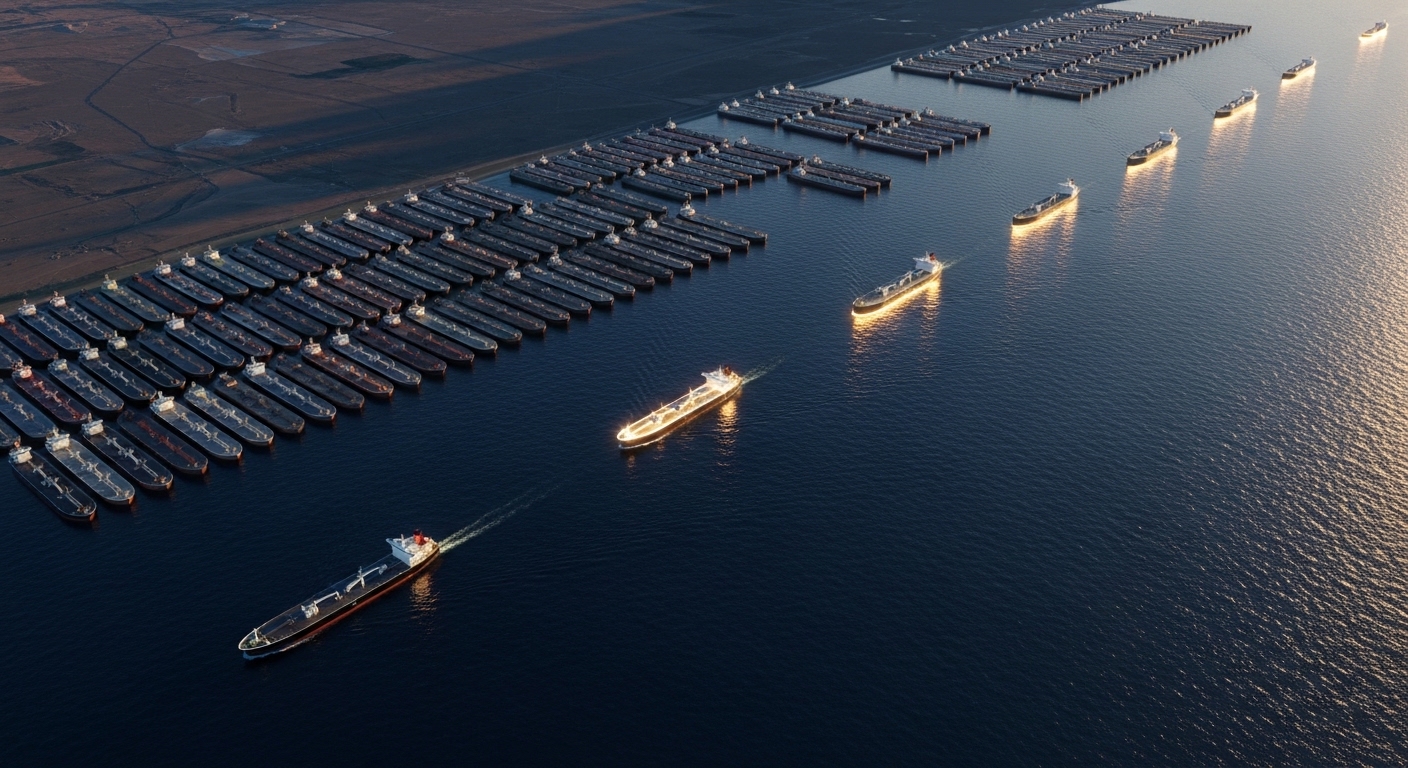


On February 28, 2026, military conflict involving the United States, Israel, and Iran escalated significantly with strikes on Iranian military facilitates and leadership. Iran responded by effectively closing the Strait of Hormuz, a 21-mile-wide waterway between Iran and Oman through which roughly 20 percent of the world’s seaborne oil trade normally passes.
The closure represents more than a maritime security crisis. In mid-March, reports emerged that Iran was considering allowing limited tanker passage through the strait, but with a significant condition: cargo must be traded in Chinese yuan, not US dollars. Data from vessel tracking firms indicate that between Iran and Oman through which roughly 20 percent of the world’s seaborne oil trade normally passes.
The closure represents more than a maritime security crisis. In mid-March, reports emerged that Iran was considering allowing limited tanker passage through the strait, but with a significant condition: cargo must be traded in Chinese yuan, not US dollars. Data from vessel tracking firms indicate that between 11.7 and 16.5 million barrels of Iranian crude have moved through the strait to China since February 28, with all transactions settled in yuan rather than dollars.
For Nigerian businesses operating in an economy dependent on both oil exports and petroleum product imports, the situation creates complex pressures that extend far beyond the immediate conflict zone. The disruption affects energy prices, currency markets, supply chains, inflation projections, and the broader macroeconomic environment in ways that require careful attention regardless of how the underlying conflict resolves.
Understanding what changed at Hormuz
The Strait of Hormuz has long been treated as a critical chokepoint for global energy flows. Approximately 20 million barrels of oil pass through the waterway daily under normal conditions, primarily from Saudi Arabia, the United Arab Emirates, Iraq, Qatar, and Iran. An estimated 84 percent of these shipments head to Asian markets, with China receiving roughly one-third of its oil supply via this route.
When the conflict began on February 28, insurance markets responded immediately. War-risk premiums for tankers transiting the strait increased from 0.125 percent to between 0.2 and 0.4 percent of vessel value per transit, an additional cost of approximately $250,000 per very large crude carrier. By March 5, the International Group of Protection and Indemnity Clubs, which provides marine liability coverage for 90 percent of global shipping tonnage, withdrew insurance coverage for vessels transiting the strait.
Without viable insurance, commercial shipping effectively stopped. Satellite tracking data shows only 77 vessels transited the strait int the first half of March 2026, compared to several hundred under normal operating conditions. At least 16 vessels were attacked in or around the strait, the Arabian Gulf, and the Gulf of Oman in the first two weeks of the conflict. More than 150 ships anchored outside the strait to avoid transit risks. The strait remained technically open but became functionally closed for most commercial operators. Iranian forces control passage, determine which vessels may transit, and establish the conditions under which passage is permitted.
The currency dimension
Since the early 1970s, global oil trade has been predominantly dollar-denominated, a system often called the petrodollar arrangement. Oil producers sell crude in dollars. Oil consumers need dollars to buy that crude. This creates persistent global demand for US currency, which reinforces the dollar’s role as the world’s primary reserve currency and provides the United States with significant financial advantages.
The reported Iranian condition, that tankers passing through Hormuz must settle cargo transactions in Chinese yuan, represents a direct challenge to this system. If implemented broadly, it would create a bifurcated global oil market: yuan-denominated barrels flowing through Hormuz for buyers willing to pay in Chinese currency, and dollar-denominated barrels rerouted through longer, more expensive alternative routes for those who are not.
China has been building infrastructure for yuan-denominated energy trade for years. The Cross-Border Interbank Payment System processed the equivalent of $245 trillion in yuan transactions in 2025, a 43 percent increase from 2024. Iran and China signed a 25-year cooperation agreement worth $400 billion in 2021, covering oil, infrastructure, and technology, with most transactions occurring outside dollar-based systems.
The Hormuz situation doesn’t create this alternative payment architecture. It accelerates adoption of systems that already exist by making the yuan-for-oil option the only viable route through the world’s most critical energy chokepoint during a period of extreme supply constraint.
Global market responses
Brent crude, which traded around $70 per barrel in mid-February 2026, surged above $110 following the conflict’s outbreak before retreating to approximately $92 per barrel by mid-March as strategic petroleum reserve releases and demand destruction began affecting markets. West Texas Intermediate followed similar patterns.
The International Energy Agency coordinated an unprecedented 400-million-barrel emergency reserve release on March 11 to address supply disruptions. The agency acknowledged that reserve releases provide temporary bridge capacity but cannot substitute for reopening the strait or restoring normal maritime security.
Oil producers in the Gulf region face difficult choices. Iraq and Kuwait began curtailing production in early March as local storage capacity filled and export routes remained blocked. Complete cessation of Persian Gulf oil exports would remove roughly 20 percent of global supply, approximately 80 percent of which normally ships to Asia.
Asian importers unable to access Gulf supplies must turn to alternative suppliers, putting upward pressure on prices worldwide even as some demand destruction occurs due to higher costs. Europe, which receives 12 to 14 percent of its liquefied natural gas from Qatar through the strait, faces parallel disruptions in gas markets affecting power generation, industrial inputs, and fertilizer production.
Federal Reserve Bank of Dallas modelling suggests that if the Strait remains closed for one quarter, the average West Texas Intermediate price would reach $98 per barrel and global real GDP growth would decline by an annualized 2.9 percentage points during that quarter. Extended closures produce proportionally larger economic impacts.
Nigeria’s complex exposure
Nigeria occupies an unusual position in this crisis, simultaneously an oil exporter that could benefit from higher crude prices and a refined product importer vulnerable to supply chain disruptions and price surges.
The country’s 2026 federal budget was benchmarked at $65 per barrel for Bonny Light crude. With production running at approximately 1.3 to 1.5 million barrels per day, every $10 increase in oil prices translates to roughly $14 million in additional daily gross revenue, or approximately $5.1 billion annually before accounting for production costs and joint venture obligations.
At current production levels and with Brent crude above $90, Nigeria’s upstream revenue improves materially compared to budget assumptions. This strengthens federally collected revenue, improves Federation Account Allocation Committee distributions to states and local governments, and reduces pressure on fiscal deficits.
But Nigeria imports most of its refined petroleum products despite being Africa’s largest crude producer. When global crude prices rise, the cost of importing petrol, diesel, and other products increases correspondingly. Following subsidy removal, domestic pump prices now move more closely with international markets, directly transmitting global price shocks to Nigerian consumers and businesses.
Data from Global Petrol Prices shows Nigerian petrol prices increased 39.5 percent between February 23 and mid-March 2026, the second-highest increase globally after Vietnam’s 50 percent surge. As of March 16, the landing cost of imported petrol stood at N1,080.47 per litre, while domestic gantry prices reached N1,175 per litre at Dangote Refinery.
Some retail outlets have raised prices above N1,300 per litre, with industry associations warning that prices could reach N2,000 per litre if the conflict continues and crude remains above $100 per barrel. Diesel prices have similarly increased to N1,620 per litre or higher at certain locations.
Downstream and supply chain impacts
The Manufacturers Association of Nigeria has warned that rising fuel costs will have far-reaching consequences across the economy. The Nigerian manufacturing sector relies heavily on generator-based power due to inadequate electricity supply. Fuel price increases directly raise production costs, compress profit margins, and force manufacturers to pass costs to consumers through higher prices for finished goods.
Transportation costs have increased proportionally with fuel prices, affecting logistics for all sectors. Food distribution costs rise as trucking becomes more expensive. Import-dependent industries face higher shipping costs as global freight rates surge; tanker costs have increased from approximately $800,000 to $3.5 million per shipment in current market conditions according to Dangote Refinery management.
PwC Nigeria notes that the cost pass-through could reignite inflationary pressures, potentially reversing the country’s recent disinflation trend. Inflation had declined for 11 consecutive months to 15.06 percent in February 2026 following economic reforms. Higher energy prices threaten to reverse this progress, affecting everything from food costs to utility bills to transport fares.
The Lagos Chamber of Commerce and Industry has cautioned that despite local refining capacity coming online, Nigeria remains exposed to global oil market volatility. The Dangote Refinery does not receive discounted crude under crude-for-naira arrangements, its feedstock is priced at global benchmarks. When international crude prices surge, refining costs increase regardless of where processing occurs.
Currency and financial market considerations
Nigeria’s foreign exchange market faces competing pressures from the Hormuz situation. Higher oil revenues should strengthen foreign exchange inflows, improve Central Bank of Nigeria reserves, and support naira stability. Nigeria’s gross foreign reserves reached $50.45 billion in February 2026, the highest level in 13 years, providing improved import cover and external stability.
However, if the yuan-for-oil mechanism gains widespread adoption, it could gradually reduce global dollar demand and affect exchange rate dynamics across emerging markets including Nigeria. Countries needing to purchase yuan to access oil through Hormuz would shift currency reserve compositions away from dollars, potentially affecting dollar liquidity in international markets.
For Nigerian businesses, this creates uncertainty around medium-term exchange rate forecasts and dollar availability for non-oil imports. Banks that have benefited from improved foreign exchange liquidity in recent months may face renewed volatility if global currency flows begin fragmenting between dollar and yuan channels.
CardinalStone Research noted that sustained elevated oil prices should lead to stronger foreign exchange inflows, improved system liquidity, and firmer deposit growth across the banking sector, supported by higher oil receipts from international oil companies and increased government revenue. However, the duration of the conflict and the extent of currency market fragmentation will determine whether these benefits materialize fully.
What Nigerian businesses should monitor
The situation remains fluid, with multiple scenarios possible depending on conflict duration, diplomatic resolution efforts, and the extent to which alternative shipping routes and reserve releases can compensate for Hormuz disruptions.
For planning purposes, Nigerian businesses should track several indicators. First, Brent crude price movements and futures curves provide signals about market expectations for conflict duration and supply restoration. Sustained prices above $90 suggest markets anticipate extended disruptions rather than quick resolution.
Second, tanker insurance availability and war-risk premium levels indicate when commercial operators believe the strait might become navigable again. The withdrawal of standard insurance coverage on March 5 was a critical threshold. Its restoration would signal improving security conditions.
Third, strategic petroleum reserve release announcements from the International Energy Agency and member countries show how much emergency capacity remains available if the crisis extends. The 400-million-barrel March 11 release was unprecedented in scale, but IEA members collectively hold approximately 1.25 billion barrels in government reserves, suggesting capacity for additional releases if needed.
Fourth, yuan adoption patterns in global oil trade, both through Hormuz and via other routes, will indicate whether this crisis accelerates structural changes in energy market currency practices or remains a temporary wartime exception.
For Nigerian manufacturers and logistics companies, scenario planning should account for fuel costs remaining elevated through at least the second quarter of 2026. Federal Reserve Bank of Dallas modelling suggests that even under quick-resolution scenarios, oil prices take time to normalize as inventories rebuild and shipping routes fully restore.
Businesses dependent on imported inputs should evaluate supply chain diversification options and consider increasing inventory buffers for critical materials to hedge against further disruptions. The current crisis affects not just oil but also liquefied natural gas, fertilizers, and petrochemicals, with cascading effects across industries.
Companies with significant dollar-denominated obligations should monitor both naira-dollar exchange rates and the broader currency market evolution. If yuan-for-oil transactions become more common globally, it could affect dollar liquidity and exchange rate volatility even in markets geographically distant from the Persian Gulf.
The planning challenge
What makes this situation particularly complex for Nigerian business planning is the combination of immediate shocks and potential structural shifts. In the short term, businesses must manage higher fuel costs, elevated inflation, potential supply disruptions, and exchange rate uncertainty.
In the medium term, they may need to adapt to a global energy market that functions differently, with yuan-denominated transactions playing larger roles, insurance and shipping costs structurally higher than pre-crisis norms, and supply chains reorganized around geographic and currency considerations rather than pure efficiency optimization.
The Association of Small Business Owners of Nigeria has encouraged entrepreneurs to adopt survival strategies including increased use of local inputs to reduce import dependence, expansion into export markets to earn foreign exchange, and operational efficiency improvements to offset higher energy costs.
These adaptations make sense regardless of how the Hormuz situation resolves. Whether the strait reopens quickly under traditional dollar-denominated trade or remains constrained with yuan-payment requirements, Nigerian businesses face an extended period of elevated costs and operational uncertainty that requires proactive management rather than passive observation.
The conflict that closed the Strait of Hormuz created immediate supply shocks. The currency conditions reportedly attached to its potential reopening suggest longer-term changes to how global energy markets function. For Nigerian businesses, both realities require attention, the urgent need to manage current cost pressures and the strategic need to prepare for possible structural changes in global trade architecture that will affect operations for years regardless of how current events conclude.
ALSO WATCH:MARKETING EDGE ONTV




Comment
No comments found.