
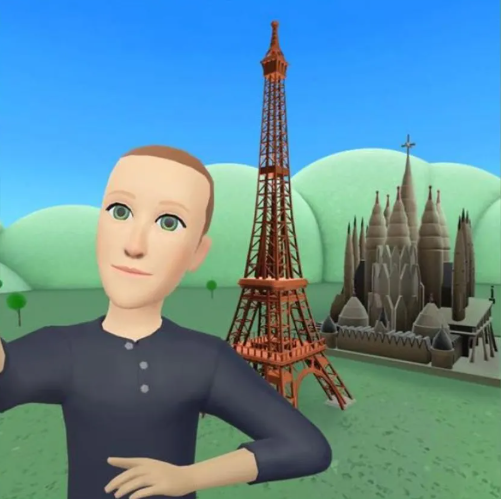


On march 18, 2026, Meta announced it would shut down Horizon Worlds, the virtual reality social platform that once sat at the center of Mark Zuckerberg’s metaverse vision ,by June 15. The app would disappear from the Quest store by March 31, leaving users just 11 days to process the end of a project Meta had spent $83.6 billion building since 2020.
Within 48 hours, Meta reversed the decision. Chief Technology Officer Andrew Bosworth appeared in an Instagram Stories Q&A session and told followers that the company had decided to keep Horizon Worlds running in VR “for the foreseeable future” after users said they were “heartbroken” about the shutdown.
The reversal might seem like Meta listening to its community. But the reality is more complicated, and far more revealing about what happens when brands confuse executive vision with consumer demand, when sunk costs drive decisions instead of market signals, and when companies can’t even execute failure cleanly.
The numbers that tell the real story
Horizon Worlds officially launched in late 2021, months after Facebook renamed itself Meta and Mark Zuckerberg declared the metaverse “the next frontier” that would reach a billion people within a decade. That future never materialized.
The platform never exceeded 200,000 to 300,000 monthly active users across its four-year lifespan. Some reports suggest usage dropped to as few as 38 active users during certain periods, though Meta disputes those figures. For context, Roblox, the platform Horizon Worlds’ mobile version not competes against, reports over 100 million daily active users.
Meta launched a mobile version of Horizon Worlds in September 2023, positioning it as an entry point for users without VR headsets. That version reached 45 million total downloads worldwide across iOS and Google Play through early 2026, with 1.5 million downloads in the first two months of this year, a 53 percent year-over-year increase that mobile intelligence firm Appfigures calls “positive momentum.”
But here’s the number that cuts through the optimism: Total consumer spending on the Horizon Worlds mobile app across its entire lifetime is $1.1 million. Against 45 million downloads. Against Meta’s $83.6 billion investment in Reality Labs, the division responsible for VR, AR, metaverse development, since 2020.
Reality Labs recorded operating losses of $6.62 billion in 2020, $10.19 billion in 2021, $13.71 billion in 2022, $16.12 billion in 2023, $17.71 billion in 2024, and $19.19 billion in 2025. The losses grew every single year. The fourth quarter of 2025 alone posted a $6.02 billion operating loss on $955 million in revenue.
To put $83.6 billion in perspective: You would need to spend $1 million every single day for 229 years to exhaust that amount. Meta burned through more capital chasing the metaverse than most countries spend on their entire annual budgets.
What the reversal actually signals
The March 19 decision to keep Horizon Worlds alive in VR wasn’t a strategic pivot. It was an admission that Meta couldn’t execute its own shutdown plan without triggering backlash from the small but vocal community still using the platform.
Bosworth’s Instagram Q&A made the limitations clear. Meta would keep existing VR worlds accessible. But it wouldn’t develop new content. It wouldn’t add new games. All development focus would remain exclusively on the mobile version. The VR experience would exist in maintenance mode, technically alive but strategically abandoned.
This creates a peculiar situation where Meta is now supporting a platform it publicly acknowledged it wanted to shut down, investing resources in infrastructure it doesn’t believe has a failure, and maintaining software it has no intention of improving. The company is trapped between admitting complete failure and pretending the original vision still matters.
From a brand strategy perspective, this is worse than a clean shutdown. A definitive end would have allowed Meta to control the narrative, position the decision as strategic reallocation toward AI and smart glasses, and move forward without the weight of maintaining zombie products. Instead, the reversal signals indecision, reactive leadership responding to small-scale complaints rather than executing clear strategy, and a company unable to make difficult decisions cleanly.
The layoffs Meta hoped you’d forget
The Horizon Worlds reversal came just two months after Meta cut more than 1,500 employees from Reality Labs in January 2026, roughly 10 percent of the division’s workforce. Among those cuts: teams working on Horizon Worlds itself, including Ouro Interactive, an in-house studio created in 2023 specifically to build first-party content for the platform.
Meta also shut down several internal VR studios, including Sanzaru Games and Ready at Dawn, developers responsible for some of the Quest platform’s marquee titles. These weren’t minor course corrections. They were admissions that the integrated VR-content-metaverse vision Zuckerberg championed in 2021 had failed to generate sustainable business.
CTO Bosworth acknowledged as much in a recent Instagram Q&A. “Here you had people doing work that we were excited about, and we ultimately realized that the integrated vision we were pursuing with Horizon and VR was just kind of too much, was overwrought,” he said.
The timeline matters. Meta cut 1,500 Reality Labs employees in January. Announced Horizon Worlds’ VR shutdown in March. Then reversed that shutdown two days later while maintaining that no new VR development would occur. The contradiction is stark: If the platform warrants keeping alive based on community response, why did Meta just eliminate the teams building for it?
The answer is that Meta doesn’t actually believe Horizon Worlds has a future in VR. The company is simply unwilling to face the public relations cost of admitting that completely. So, it maintains the platform at minimum viable expense while redirecting actual investment elsewhere.
Where the money actually went
The $83.6 billion Reality Labs burned through didn’t disappear into a void. It funded hardware development for Quest headsets, research into advanced VR and AR technologies, infrastructure for virtual world creation, acquisitions of VR studios and technology companies, and thousands of employees working toward Zuckerberg’s metaverse vision.
Some of that investment produced value. The Rau-Ban Meta smart glasses, developed by Reality Labs but positioned as wearable AI rather than metaverse hardware, sold 7 million units in their first year, representing genuine product-market fit. The Quest headsets, while not mass-market successes, established Meta as the dominant player in consumer VR hardware, with an estimated 75 percent market share.
But Horizon Worlds was the software that was supposed to justify the hardware. It was the social experience that would make VR headsets essential rather than optional. It was the application that would transform Meta’s expensive bet on new computing platforms into a platform that consumers actually wanted to use regularly.
That application never materialized. Despite premium production values, despite celebrity partnerships, despite marketing spend, despite integrations across Meta’s broader ecosystem, Horizon Worlds never became the place people wanted to spend time. The legless avatars became memes. The empty virtual spaces became punchlines. The ambitious vision became an example of what happens when companies build for futures consumers didn’t request.
The consumer signals Meta ignored
Horizon Worlds’ failure wasn’t unpredictable. The signals were visible from launch. Low initial adoption. Poor retention rates. Minimal organic growth. Users reporting harassment, technical glitches, and experiences that felt more isolating than social. Media coverage focused on how few people were actually using the platform rather than what creative experiences it enabled.
Meta responded not by rethinking the fundamental premise but by increasing investment. More marketing. More features. More content. More celebrity appearances. More integrations. The strategy assumed the problem was awareness or polish rather than fundamental product-market misalignment.
Meanwhile, Roblox, a platform Horizon Worlds’ mobile version now competes against, was demonstrating what genuine adoption looks like. Over 100 million daily active users. Billions in annual revenue. Organic creator communities building economies within the platforms. Social experiences that users actively chose over alternatives. None of this required VR headsets or metaverse positioning. It just required building what users actually wanted.
The comparison is instructive. Roblox succeeded by enabling user-generated creativity on accessible platforms people already owned, phones, computers, consoles. Horizon Worlds required buying expensive hardware to access simplified creation tools in environments that felt more like technology demonstrations than social destinations. Roblox met users where they were. Horizon Worlds demanded users come to where Meta wanted them to be.
What brands should learn from $83.6 billion in lessons
The Horizon Worlds failure offers strategic lessons that extend far beyond VR platforms. First, executive vision divorced from consumer validation destroys value at scale. Zuckerberg’s belief that the metaverse represented computing’s future wasn’t inherently wrong. But Meta bet billions on that future arriving within a specific timeframe, through specific technologies, requiring specific consumer behaviours. When reality diverged from vision, the company doubled down rather than adjusting course.
Second, sunk costs create decision paralysis that compounds failure. The more Meta invested in Horizon Worlds and broader metaverse infrastructure, the harder it became to admit the bet wasn’t working. Each quarterly loss created pressure to continue investing to justify previous investment. The $83.6 billion became an anchor preventing strategic flexibility rather than a signal to redirect resources.
Third, consumer adoption can’t be forced through marketing or production values. Horizon Worlds featured high-quality graphics, celebrity appearances, brand partnerships, and integration across Meta’s ecosystem. None of that mattered because the fundamental experience didn’t solve problems users cared about or provide entertainment they preferred over existing alternatives. Polish can’t compensate for product-market misalignment.
Fourth, platform businesses require genuine network effects, not manufactured ones. Meta tried to create metaverse momentum by hosting events, partnering with brands, and positioning Horizon Worlds as inevitable. But network effects emerge from users finding value in each other’s presence, not from corporate declarations that a platform matters. The few hundred thousand users who tried Horizon Worlds didn’t bring their friends because the experience wasn’t worth sharing.
Fifth, knowing when to kill failing products is as important as knowing when to launch new ones. Meta’s March 18 shutdown announcement was late; Horizon Worlds should have been deprecated years earlier when adoption data made the trajectory clear. But even that delayed decision was better than the March 19 reversal, which created the worst of both worlds: maintaining a product the company doesn’t believe in while signalling strategic confusion to investors and employees.
The AI pivot Meta hopes erases metaverse memory
Meta’s current positioning emphasizes artificial intelligence over virtual reality. The company stopped using the word “metaverse” in earnings calls by Q3 2024. Zuckerberg now described Meta as an AI company that also builds VR hardware. The $83.6 billion in Reality Labs losses are framed as necessary research and development toward future technologies rather than failed bets on specific platforms.
This narrative reframing is strategic but incomplete. Yes, some Reality Labs research contributes to AI development. Yes, Meta’s investment is smart glasses and wearable AI shoes learning from VR’s limitations. But Horizon Worlds wasn’t research and development toward undefined futures. It was a specific product making because the technology wasn’t ready but because the proposition wasn’t compelling.
The $1.1 million in total consumer spending on Horizon Worlds mobile, against 45 million downloads and years of availability, reveals that even when Meta successfully acquired user attention, it couldn’t convert that attention into economic activity at any meaningful rate. The mobile app’s 53 percent download growth in early 2026 might signal momentum. But comparing absolute scale, 1.5 million downloads across two months versus Roblox’s 100 million daily active users, reveals that momentum as early-stage growth on a small base, not confirmation of product-market fit.
When you can’t even fail cleanly
The March 18 to March 19 reversal encapsulates Meta’s metaverse journey: ambitious vision, massive investment, minimal adoption, strategic confusion, reactive decision-making, and inability to execute even failure decisively.
A company that spent $83.6 billion virtual worlds couldn’t shut down those worlds without backlash from users it couldn’t afford to lose because they represented the only evidence anyone cared about what Meta had built. The reversal wasn’t victory. It was evidence that even Meta’s community management failed to prepare users for the inevitable end of a platform that never achieved sustainable scale.
For Nigerian brands watching from outside Silicon Valley’s reality distortion field, the lesson is simpler than Meta’s complex post-mortems suggest: Build what consumers demonstrate they want through their behaviour, not what executives believe they should want through their vision. Validate demand before scaling investment. Watch adoption signals more carefully than internal projections. Know when to kill products that aren’t working. And when you decide to shut something down, execute that decision cleanly rather than retreating when small constituencies complain.
Meta had the resources to learn these lessons gradually. Most brands don’t. The $83.6 billion education Meta received on consumer behaviour, product-market fit, and strategic decision-making is expensive wisdom available free to anyone paying attention. The question is whether brands will apply those lessons or assume Meta’s failures were unique to metaverse ambitions rather than universal truths about what happens when vision substitutes for validation.
ALSO WATCH:MARKETING EDGE ONTV



Comment
No comments found.