
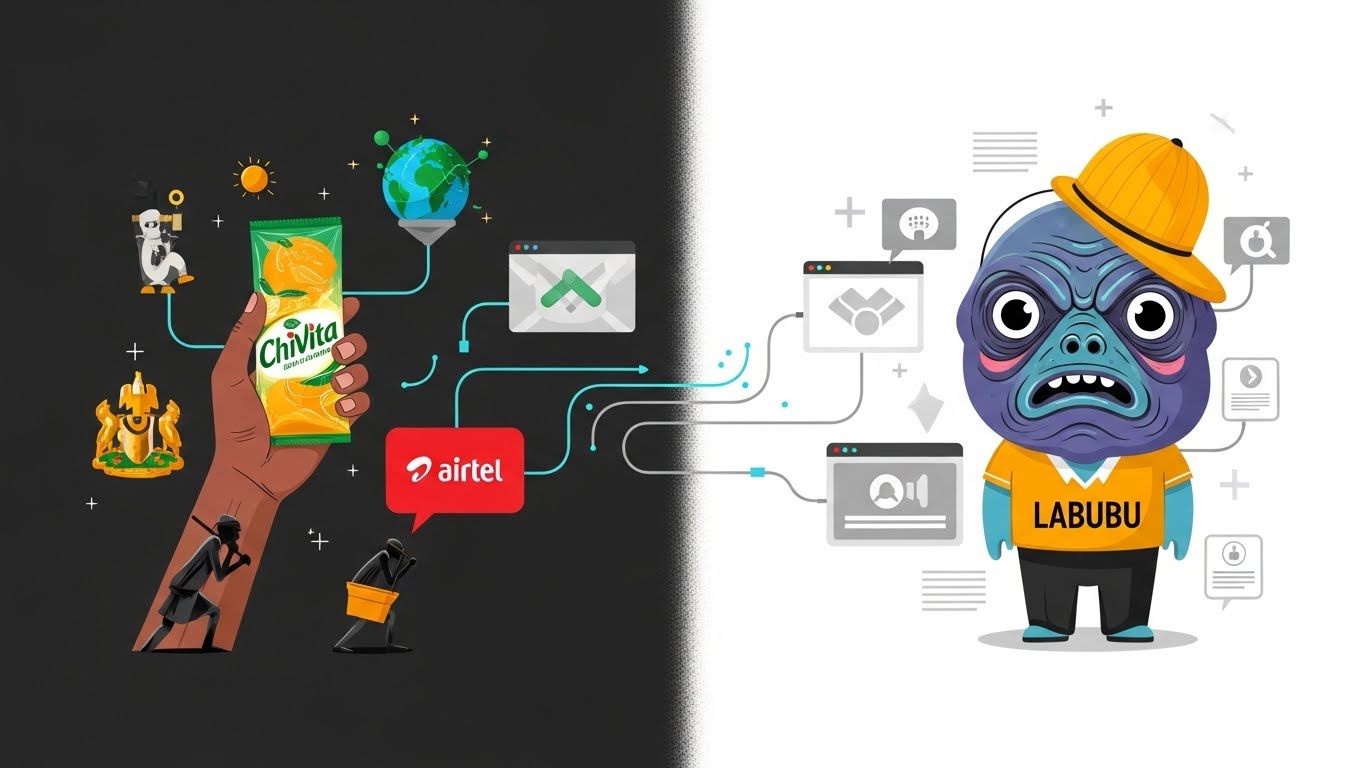


The year 2025 has shown the global marketing industry that attention is no longer something brands buy. It is something they earn through culture, innovation, and community. From global pop-culture waves to Nigeria’s most resonant campaigns, the lesson is simple: the brands that win are the ones that feel human, not corporate.
And nothing demonstrated this more sharply than the unexpected rise of Labubu, a mascot that turned a niche collector’s item into a global cultural force.
Labubu: When a toy becomes a global marketing masterclass
Labubu did not start life as a marketing idea. It evolved into one. The designer toy from POP MART erupted into a global craze: long queues, bidding wars, creator-driven content with millions of views, and eventually a cultural invasion into markets like Nigeria.
Labubu resonated because it offered escapism, nostalgia, identity, and a sense of belonging. It became a visual language for youth culture, a shorthand for digital humour, and an emblem of FOMO-driven demand.
The character proved that modern marketing wins when a product becomes a persona, when people take over the narrative, and when brands allow culture to carry the message. Marketers across FMCG, fintech, and entertainment studied the phenomenon, eager to understand its formula.
But 2025 did not belong only to global icons. Nigerian brands delivered their own standout moments.
Chivita: A masterclass in unity, joy, and shared identity
Chivita’s 2025 campaign distinguished itself not with theatrics but with authenticity. “Everyone Has a Chivita” captured real people and everyday moments. Students, mothers, traders, professionals, and creatives all saw a piece of themselves reflected back.
It reinforced a simple but powerful truth: Chivita is not just juice; it is part of the Nigerian dining experience. The campaign blended nostalgia and modernity and succeeded because it mirrored reality rather than exaggerating it.
Airtel: Storytelling over selling
Airtel once again proved why it remains one of Nigeria’s most consistent cultural storytellers. Instead of overwhelming audiences with prices or promotions, the brand leaned into humanity.
Its “Live Limitless” work focused on ambition, mobility, creativity, and daily hustle. It felt like a conversation with Nigerians, not a broadcast to them. That shift from transactional communication to aspirational storytelling pushed Airtel’s campaign beyond telecom advertising and into social conversation.
inDrive: When humour becomes strategy
Ride-hailing rarely receives creative applause, yet inDrive broke through by speaking the language of its core users. The brand leaned into humour, sketch-style storytelling, and the chaos of Nigerian city transport.
While competitors argued over price points, inDrive chose relevance. It treated humour as a strategic tool, not decoration, and built a distinct identity among young urban riders.
FrieslandCampina WAMCO: When sustainability becomes credible
In a year filled with empty “purpose” claims, FrieslandCampina WAMCO stood out for doing the opposite. Its efforts in recycling education, community engagement, and waste reduction felt grounded and sincere.
Purpose only works when brands back it with behaviour. FrieslandCampina demonstrated that Nigerian FMCG brands can speak about sustainability without losing trust. It signalled a new direction in the industry: purpose must be proven, not performed.
What 2025 is teaching us and how brands must evolve in 2026
Across every example, from Labubu to Nigeria’s standout campaigns, a clear pattern is emerging. Modern marketing draws its power not from what brands push out but from what people pull in. Relevance now depends on cultural fluency, emotional intelligence, and narratives that invite participation.
However, the real question is what follows next.
In 2026, brands will not succeed by repeating this year’s strategies. They must elevate them with sharper insight, deeper rigour, and a more honest understanding of audiences.
Culture must shift from tactic to philosophy. Labubu succeeded because people adopted it as part of their identity. Brands must stop chasing virality and instead build properties and stories that become cultural assets.
Thought must replace imitation. Chivita succeeded because it saw Nigerians clearly. In 2026, brands must invest in research, social listening, community immersion, and truth.
Story must overtake noise. Airtel showed that audiences reward brands that speak clearly and empathetically. In a cluttered landscape, simplicity and emotional clarity will win.
Humour and honesty must feel deliberate. InDrive proved that humour can be both strategic and culturally sharp. Brands must avoid opportunism and create work rooted in lived experience.
Purpose must be lived, not declared. FrieslandCampina showed that sustainability gains weight only when supported by evidence. African consumers will expect proof, not promises.
Ultimately, the marketers who understand that people do more than watch content—they remix it, challenge it, reshape it, ignore it, or adopt it—will define 2026. The future belongs to those who design for participation rather than performance. That is where the industry’s next breakthroughs will emerge.
ALSO WATCH MARKETING EDGE ONTV



Comment
No comments found.