
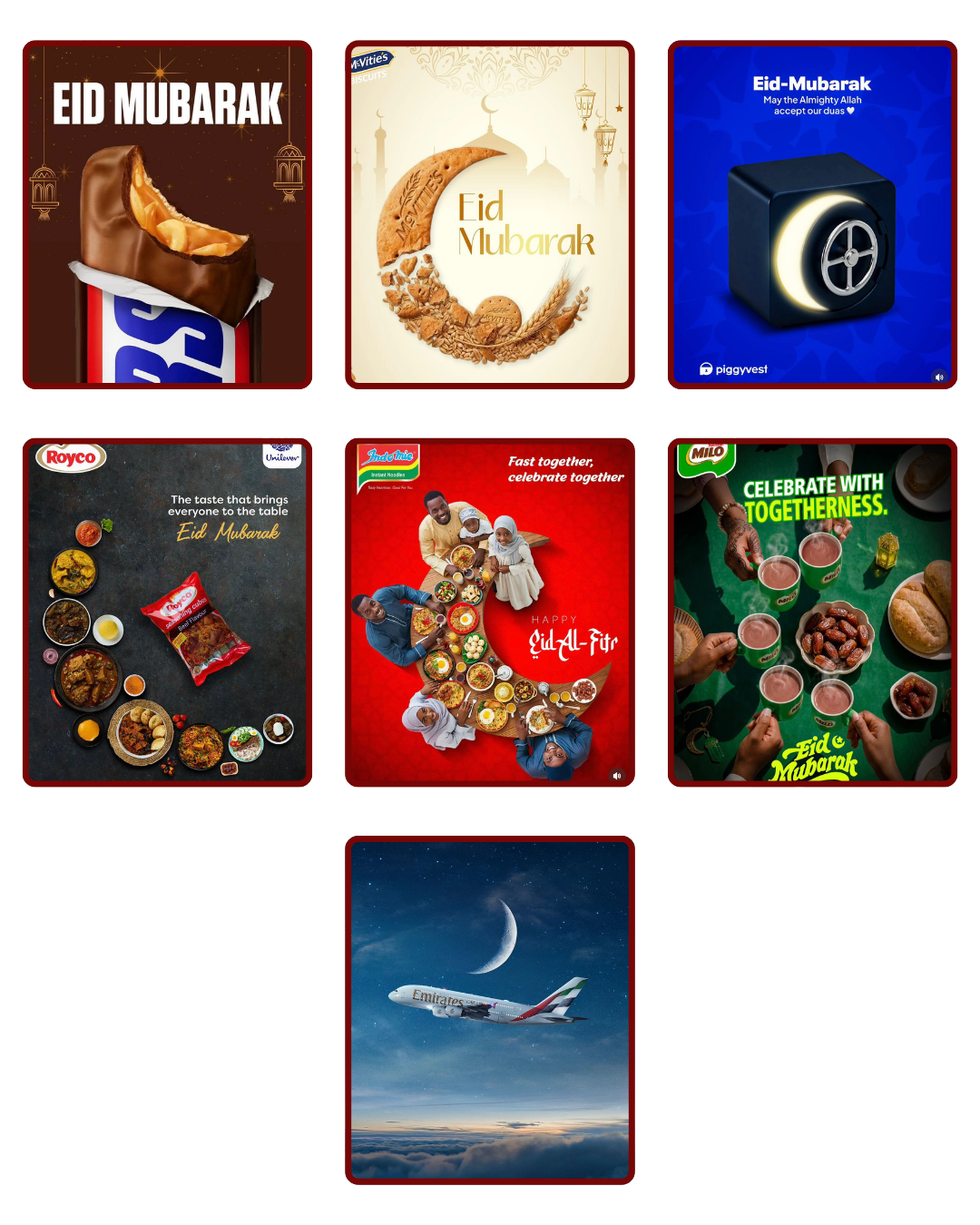


Eid al-Fitr marks the end of Ramadan’s 30 days of fasting, prayer, and spiritual reflection. For Nigerian brands and their global counterparts operating in Muslim-majority markets, the occasion presented a creative challenge: how to celebrate a deeply significant religious authentically while maintaining brand presence and commercial relevance.
The most successful Eid 2026 executions shared a unifying visual element, the crescent moon. Not as decorative afterthought or generic Islamic symbol, but as strategic creative device that brands transformed, reimagined, and integrated into their core products and services. From chocolate bars shaped into crescents to biscuits forming lunar arcs to airplane silhouettes against moonlit skies, the crescent became the canvas where brand creativity met cultural respect.
What separated these executions from standard holiday greeting was the creative commitment to transformation rather than decoration. The brands that resonated didn’t simply place crescent moons alongside their logos. They turned their products into moons, positioned their services within lunar metaphors, or created visual narratives where the crescent served essential storytelling function rather than ornamental role.
The result was Eid marketing that felt celebratory without being exploitative, culturally fluent without being performative, and creativity ambitious while respecting the observance’s spiritual significance. These weren’t checkbox exercises in calendar marketing. They were demonstrations of how brands, both Nigerian and international, are increasingly sophisticated in approaching religious celebrations with creative intelligence rather than generic templates.
When products become celestial objects
The boldest creative strategy emerging from Eid 2026 was product transformation, brands literally reshaping their offerings into crescent moons rather than merely associating products with the celebration.
Snickers deployed this approach with striking simplicity. A chocolate-dipped crescent moon emerging from the iconic Snickers wrapper, set against warm brown background with golden lantern illustrations. The execution required no explanation, no lengthy copy, just “EID MUBARAK” in bold white letters. The creative worked because it honoured the crescent’s symbolic importance while maintaining unmistakable brand identity. Snickers didn’t try to obscure what it sells; chocolate bars, but elevated the product into something fitting the celebration’s significance.
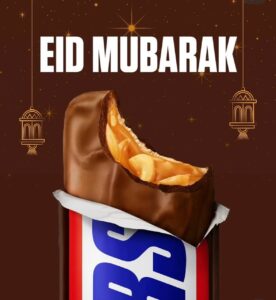
The transformation strategy works because it demonstrates brand confidence. Rather than hiding commercial intent behind spiritual messaging, Snickers acknowledged what it is, an indulgent treat, and positioned that indulgence as appropriate for celebration. The crescent shape elevated the everyday chocolate bar into something worthy of Eid’s festive spirit without pretending chocolate has spiritual meaning.
McVitie’s Biscuits executed similar transformation through more literal product integration. The creative shows actual McVitie’s biscuits, embossed with the brand name, arranged into a crescent moon shape against cream background with gold Islamic patterns, mosque silhouettes, and hanging lanterns. The wheat stalks and scattered biscuit pieces at the crescent’s base grounded the celestial imagery in the grain-based product McVitie’s actually sells.
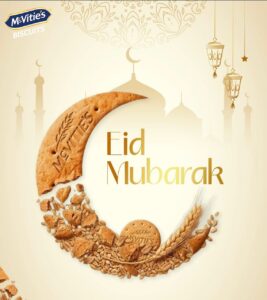
What makes this execution particularly effective is the attention to product authenticity. These aren’t generic biscuits styled to look premium. They’re recognizable McVitie’s biscuits that consumers know and buy, arranged creatively to honour Eid’s symbolism while maintaining brand recognition. The cream and gold colour palette signals premium quality without abandoning the approachable brand identity McVitie’s built in accessible snacking.
Both executions demonstrate that product transformation requires creative courage. The risk is appearing gimmicky, forcing products into shapes that feel contrived rather than natural. Snickers and McVitie’s avoided this by ensuring the crescent integration felt celebratory rather than forced, honouring both the religious symbolism and product reality.
Visual metaphor that connects celebration to brand promise
PiggyVest took a more conceptual approach, using the crescent moon as metaphorical device rather than literal product transformation. The creative features a sleek black safe with glowing crescent moon on its face, set against deep blue background. The copy reads simply: “Eid-Mubarak. May the Almighty Allah accept our duas.”

The safe-as-moon metaphor works on multiple levels. PiggyVest’s core service is savings and financial security. A safe represents protection, security, and the disciplined accumulation that savings requires. The crescent moon traditionally marks time, the lunar calendar determines Ramadan’s start and Eid’s arrival. By positioning the crescent on a safe’s face, PiggyVest connects the discipline of Ramadan fasting with the discipline of saving, the security of faith with financial security, the time-marking function of the moon with the future-planning function of savings.
This conceptual sophistication separates metaphorical approaches from superficial symbol usage. PiggyVest didn’t just place a crescent near its logo. The brand found genuine connection between Islamic observance themes and its service value proposition, then visualized that connection through carefully considered imagery.
The glowing effect on the crescent adds visual interest while suggesting illumination and guidance, themes central to both Islamic teaching and financial planning. The blue background evokes night sky without literalizing it, allowing the safe and crescent to command full attention.
The feast table as celebration centerpiece
Several brands chose the feast as their creative foundation, positioning products within the communal celebration that defines Eid for many Muslim families.
Royco (Unilever) created the most comprehensive feast visualization. The creative shows elaborate overhead spread of Nigerian dishes, jollof rice, fried fish, chicken stew, various proteins and sides, arranged on dark textured surface with the Royco seasoning cubes package prominently integrated. The copy “The taste that brings everyone to the table. Eid Mubarak” connects product benefit to celebration purpose.
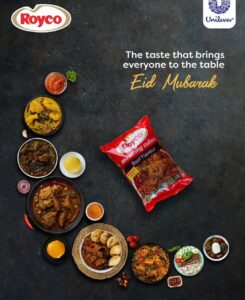
What elevates this execution beyond generic food photography is the authenticity of the spread. These aren’t styled dishes that look beautiful but unrecognizable. They’re actual Nigerian feast foods, the jollof, the proteins, the stews, that Nigerian Muslim families prepare for Eid celebration. The styling honours real cooking rather than aspirational food that exists only in advertising.
The product integration feels natural because Royco cubes genuinely feature in these dishes. The brand isn’t forcing presence where it doesn’t belong. Royco is acknowledging its actual role in enabling the flavors that make celebration meals special. The “taste that brings everyone to the table” positioning connects product function with Eid’s communal nature without overstating importance.
Indomie deployed similar feast strategy with overhead shot showing family members in traditional Islamic dress gathered around table laden with Indomie noodles prepared various ways, alongside eggs, vegetables, and drinks. The copy “Fast together, celebrate together. Happy Eid Al-Fitr” creates direct connection between Ramadan’s communal fasting and Eid’s communal celebration, with Indomie positioned as the quick, satisfying meal enabling that togetherness.

The genius in Indomie’s execution is the “fast together, celebrate together” framing. It acknowledges the full Ramadan-to-Eid journey rather than treating Eid as isolated moment. The word “fast” carries double meaning, the speed of Indomie preparation and the fasting just completed, creating linguistic connection that reinforces product relevance.
The family composition in the visual matters significantly. Multiple generations, traditional dress, genuine smiling faces looking down at the camera from above. This perspective, the viewer positioned as if sitting at the table looking up at loving family, creates emotional connection that standard eye-level photography couldn’t achieve. We’re not observing the celebration. We’re invited into it.
Milo extended this feast-table approach with overhead shot emphasizing the brand’s cups filled with Milo arranged among dates, bread, and other Iftar items on green prayer mat. Henna-decorated hands reaching for cups create authenticity markers that signal genuine cultural understanding rather than surface-level decoration.
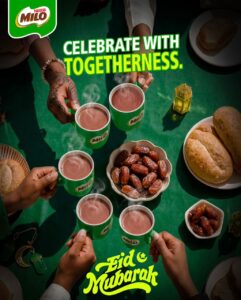
The “CELEBRATE WITH TOGETHERNESS” headline, combined with “Eid Mubarak” in playful script, positions Milo as facilitator of family connection rather than just beverage choice. The green background, Islam’s traditional colour, and the prayer mat setting ground the celebration in religious context without overstepping into territory where beverage brands lack credibility.
When the journey becomes the message
Emirates took the most conceptually ambitious approach by positioning travel within Eid celebration narrative. The creative shows an Emirates A380 flying through night sky, passing beneath a glowing crescent moon, above clouds with warm sunset/sunrise colors at horizon. Stars dot the deep blue sky, creating visual drama that standard airplane photography rarely achieves.
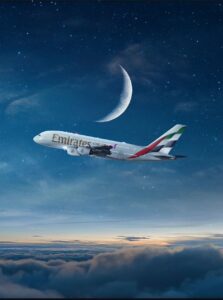
The execution contains no product claims, no service promises, no fare promotions. Just the image, a small crescent moon, and the implicit message: Eid is about homecoming, reunion, family gathering. Emirates facilitates those connections by moving people across distances.
This restraint demonstrates sophisticated brand thinking. Emirates could have promoted Eid travel deals, highlighted route networks connecting Muslim-majority cities, or emphasized service features appealing to religious travellers. Instead, the brand trusted visual storytelling to communicate value without explicit selling.
The nighttime setting serves multiple functions. Practically, Islamic calendar follows lunar cycles, making the moon’s visibility religiously significant. Metaphorically, the darkness-to-light transition evokes Ramadan’s spiritual journey toward Eid’s celebration. Visually, the night sky allows the crescent moon and airplane to dominate without competing background elements diluting focus.
The airplane’s positioning matters, crossing beneath the moon rather than toward it or away from it. This suggests journey in progress, movement facilitated rather than arrival promised. Emirates doesn’t claim to deliver Eid joy. It acknowledges its role in enabling the journeys that make celebration possible.
What unified these diverse executions
Despite spanning products from chocolate to instant noodles to air travel, these Eid creatives shared strategic principles that explain their collective success.
First, they all demonstrated product-celebration fit rather than forcing relevance. Snickers acknowledges it sells indulgent treats appropriate for celebration. Royco recognizes its role in flavouring feast dishes. PiggyVest connects saving discipline with fasting discipline. Each brand found genuine connection between what it offers and how Eid is actually celebrated, then built creative around that authentic intersection.
Second, they balanced cultural respect with brand identity. None of these executions abandoned brand recognition in pursuit of religious authenticity. The Snickers wrapper remains unmistakable. McVitie’s biscuits show their embossed brand names. Royco’s package appears prominently. Emirates’ livery is instantly recognizable. The brands honoured Eid without erasing themselves, demonstrating that cultural respect and commercial presence can coexist when handled thoughtfully.
Third, they chose visual storytelling over copy-heavy explanation. The strongest executions used minimal text, trusting that images would communicate meaning. The crescent moons didn’t need paragraphs explaining their significance. The feast tables spoke for themselves. The Emirates airplane against night sky required no caption describing the reunion journeys Eid travellers take.
Fourth, they demonstrated restraint in avoiding religious overreach. None of these brands attempted to teach Islamic values, quote religious texts, or position themselves as spiritual authorities. They acknowledged Eid’s significance, offered sincere greetings, and connected their products to celebration without presuming expertise they don’t possess. This humility created authenticity that more ambitious religious messaging might undermine.
Fifth, they invested in production quality that signalled genuine commitment rather than obligatory participation. The Emirates night sky photography, the McVitie’s product styling, the Royco feast composition, all demonstrated budget allocation and creative attention indicating that brands took Eid seriously enough to produce work of genuine quality rather than repurposing generic templates.
The creative maturity this signals
The sophistication visible across these Eid 2026 executions, from Nigerian brands like Indomie to global players like Emirates, indicates broader evolution in how brands approach religious and cultural celebrations in diverse markets.
The crescent moon functioned as shared visual language that international and local brands could speak fluently. This suggests that culturally specific creative doesn’t require local-only expertise or market-specific agencies. Global brands demonstrated they can execute with cultural sensitivity equal to domestic competitors when they invest in understanding context rather than applying one-size-fits-all templates.
The variety of approaches, product transformation, visual metaphor, feast celebration, journey narrative, proves that creative constraint actually expands possibility. Working within the parameters of Islamic symbolism and Eid tradition didn’t limit these brands to identical executions. Instead, the shared framework of crescent moons and celebration themes became foundation for diverse creative expressions reflecting each brand’s unique positioning and product reality.
The appreciative reception these creatives received from Nigerian Muslim audiences, evident in social media engagement and brand conversation during Eid period, demonstrates that consumers recognize and reward authentic cultural effort. The brands that invested in thoughtful, culturally grounded creative generated goodwill and brand affinity beyond what generic “Happy Eid” posts could achieve.
For Nigerian marketers planning future religious and cultural celebrations, these executions offer lessons extending beyond Eid specifically. The strategic principles, finding authentic product-celebration connections, balancing cultural respect with brand identity, trusting visual storytelling, demonstrating restraint, investing in quality, apply equally to Christmas, Easter, traditional festivals, and other calendar moments where brands seek cultural relevance without cultural appropriation.
The canvas continues
The crescent moon that marked Ramadan’s end and Eid’s beginning served these seven brands as more than religious symbol. It became creative device enabling product transformation, visual metaphor, and storytelling that honoured celebration while maintaining commercial presence.
The brands that succeeded didn’t try to obscure what they sell or pretend commercial intent doesn’t exist. They acknowledged their products honestly while finding creative ways to position those products within genuine celebration context. Chocolate becomes fitting indulgence. Seasoning cubes enable feast flavors. Instant noodles facilitate quick family meals. Savings discipline mirrors fasting discipline. Air travel enables homecoming.
This honest, creative approach to cultural marketing represents maturity that Nigerian advertising is demonstrating with increasing consistency. The crescent moon became canvas where brands proved that celebration and commerce, cultural respect and creative ambition, religious significance and marketing effectiveness can coexist when handled with intelligence, investment, and genuine care for the audiences being served.
ALSO WATCH:MARKETING EDGE ONTV




Comment
No comments found.