
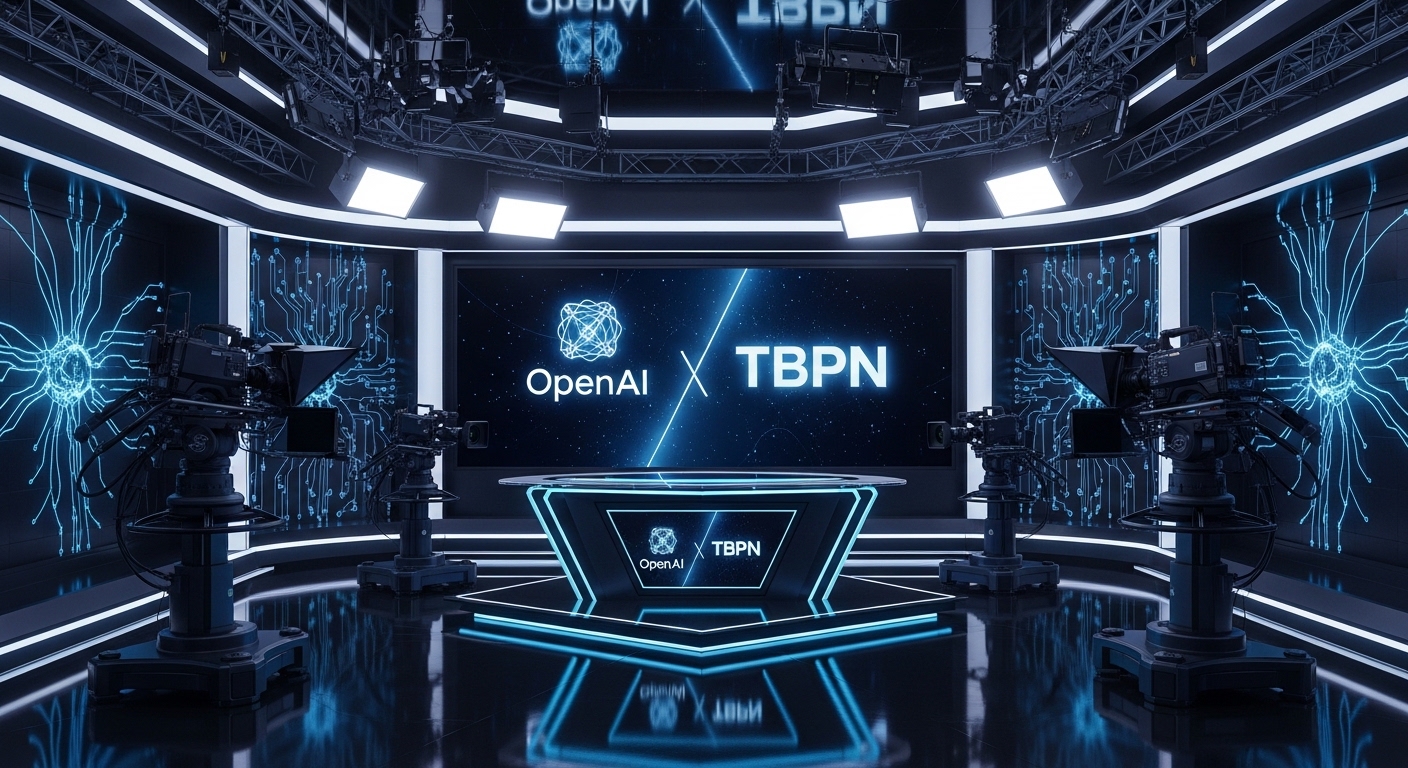


OpenAI has acquired Technology Business Programming Network, the daily tech talk show that streams live across YouTube, X, and multiple platforms, marking the AI giant’s first media company acquisition. The deal, announced April 2nd, positions OpenAI to directly shape conversations about artificial intelligence through owned media rather than traditional communications channels.
TBPN, hosted by former tech founders John Coogan and Jordi Hays, runs three hours daily covering technology, business, AI, and defence news. The show has cultivated devoted Silicon Valley following despite relatively modest YouTube subscriber count of 58,000. High-profile guests including Meta CEO Mark Zuckerberg, Microsoft CEP Satya Nadella, and OpenAI’s Sma Altman regularly appear on programming that’s been described as “what if SportsCenter and LinkedIn merged.”
The acquisition comes as OpenAI faces intensifying public scrutiny over AI safety, market dominance, and business practices. The company’s chief communications officer position has remained vacant since Hannah Wong’s departure earlier this year, leaving communications oversight to Fidji Simo, CEO of AGI deployment, who championed the TBPN acquisition.
“As I’ve been thinking about the future of how we communicate at OpenAI, one thing that’s become clear is that the standard communications playbook just doesn’t apply to us,” Simo stated in announcement to staff. “We’re not a typical company. We’re driving a really big technological shift. ”
Deal terms weren’t disclosed, though Financial Times reported the transaction valued at “low hundreds of millions.” TBPN generated approximately $5 million advertising revenue in 2025 and is tracking towards $30 million in 2026, according to Wall Streer Journal reporting. The show has attracted sponsorships from Ramp, Plaid, Google’s Gemini, and maintains partnerships with New York Stock Exchange.
TBPN will operate within OpenAI’s strategy organisation, reporting to Chirs Lehane chief global affairs officer. Lehane, who invented the phrase “vast right-wing conspiracy” during Clinton White House tenure, has been described as master of “political dark arts” and was architect behind crypto industry super PAC Fairshake. He joined OpenAI in 2024 and has advocated for preventing state AI regulation and easing environmental restrictions on data centre construction.
OpenAI has promised editorial independence, with TBPN maintaining control over programming decisions and guest selection. However, observers question whether genuinely independent coverage remains possible when outlet is owned by company it frequently covers.
“OpenAI’s promise of editorial independence for TBPN is irrelevant,” wrote Martin Peers in The Information. “Can you imagine TBPN doing a hard-hitting piece on OpenAI? It’s not in the show’s DNA.”
The acquisition continues century-old pattern of platform pioneers buying content to shape narratives. RCA created NBC in 1926 partly to sell radios. Tech companies including Plaid and Robinhood have recently acquired or launched media properties to deepen customer relationships and control messaging.
For OpenAI, the strategic value extends beyond marketing. The company is valued at $852 billion following recent $122 billion funding round, but faces billions in infrastructure losses whilst competing against Anthropic’s Claude, Google’s Gemini, and other AI platforms. Public perception becomes critical competitive advantage as AI transitions from experimental technology to mainstream utility.
The timing raises questions about OpenAI’s M&A strategy. The company shut down Sora, its AI-generated video social media app, just weeks before announcing TBPN acquisition. In June 2025, OpenAI spent $6.4 billion acquiring Jony Ive’s nascent devices startup. The strategic thread connecting these moves remains unclear.
“When you have more and more disruptive competitors showing up, they need to build things that give people a unique reason to pick ChatGPT over other AI platforms,” noted Daniel Newman, CEO of Futurum Group. “They are kind of chasing vibes a little bit.”
The acquisition signals that controlling AI narrative has become strategic imperative worth hundreds of millions. Whether owned media can maintain credibility whilst serving corporate objectives will test fundamental tensions between journalism and marketing. For now, OpenAI has bought the microphone. The question is whether anyone will still listen.



Comment
No comments found.