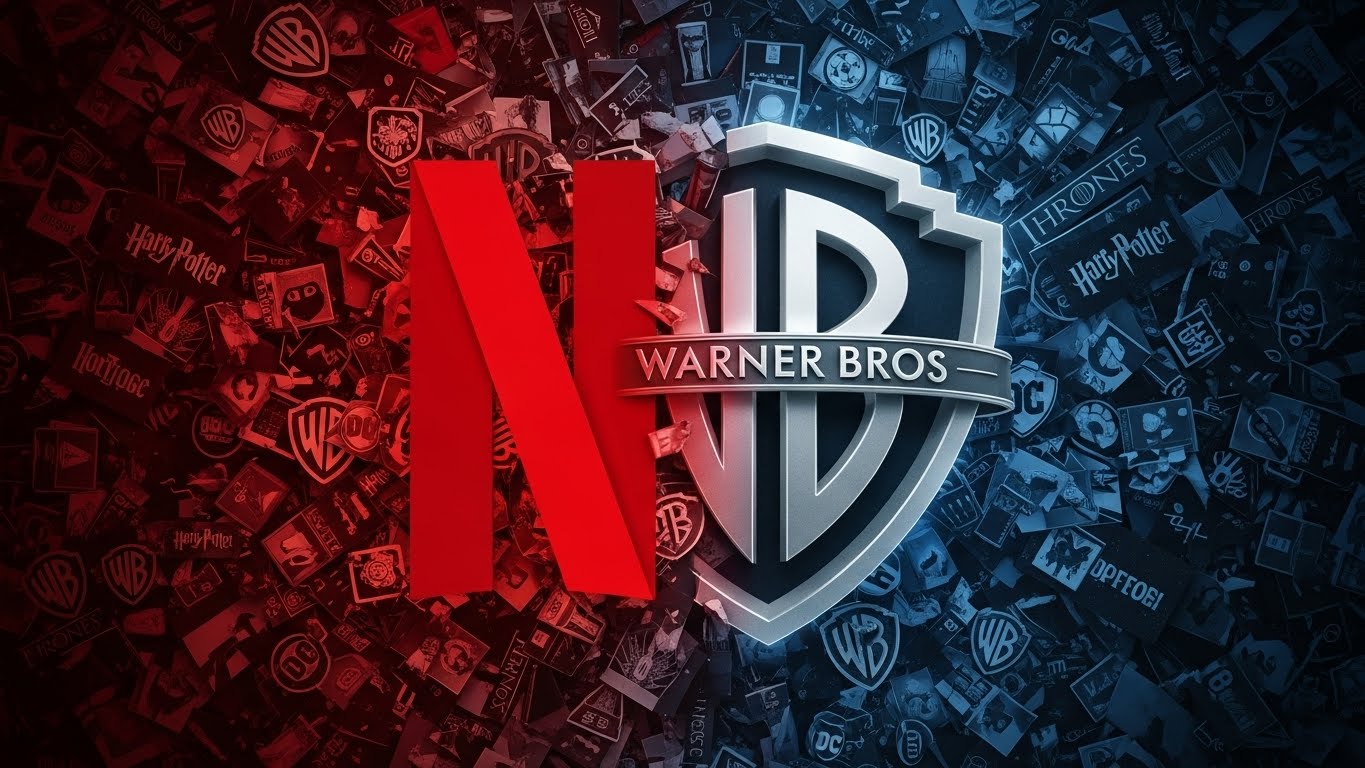


Netflix’s agreement to acquire Warner Bros Discovery’s film and streaming assets for $72 billion has triggered one of Hollywood’s most significant disruptions in decades. This decision concludes a year characterized by consolidation, reduced content budgets, and fierce competition for global streaming supremacy.
The agreement, which both entities have validated and now awaits regulatory endorsement, positions Netflix as the steward of several of the globe’s most esteemed entertainment assets. These assets encompass Harry Potter, Game of Thrones, DC properties, Friends, and the comprehensive HBO content repository. Significantly, these franchises have influenced global television culture for more than fifty years.
A Historic Play Ends a Turbulent Year
The announcement arrived in a December settling characterized by strained studio finances. Furthermore, linear-TV revenues were diminishing, and the global streaming market faced challenges with subscriber growth.
Warner Bros faced debt challenges and a tumultuous restructuring phase. Therefore, the company opted to sell after assessing various offers, including a complete company bid from Paramount Skydance.
Co-CEO Ted Sarandos of Netflix characterized the acquisition as “a chance to define the next century of storytelling.” He also referred to Warner Bros as “the company that defines the last one.”
Consequently, with the agreement, Netflix has transcended its status as merely the world’s largest streaming service. It acquires one of the most formidable content libraries ever gathered in the contemporary entertainment landscape.
Regulatory Alarm and Industry Fallout
Instantaneous retaliation ensued. The Writers Guild of America (WGA) urged authorities to halt the transaction. They worried that the merger would “eliminate jobs, push down wages, and reduce the diversity of content available to audiences.”
Theater owners and operators shared these worries. They stated that the purchase poses an “unprecedented threat” to the theatrical industry. This industry is already struggling to recover from the post-pandemic instability.
According to analysts, a unified Netflix and Warner Bros. would be a content behemoth, surpassing even Disney and Comcast. Regulatory monitoring is anticipated to be severe, particularly in the United States and Europe.
The Future of HBO Max and Cost Savings
Rather than a complete closure, Co-CEO Greg Peters stated that the HBO brand would remain essential. This could indicate a possible tiering or integration inside Netflix’s current platform. However, executives from the company refrained from providing details.
As the combined business looks to save expenses, industry watchers anticipate a simplified offering. They also anticipate possible cuts to film and TV output. Netflix claims it can save $2 billion to $3 billion by reducing duplication in its support and technology departments.
Hollywood’s Consolidation Era Accelerates
The timing of the deal in late 2025 highlights a significant structural transformation.
-
Escalating production expenses have driven studios into economically unviable conditions.
-
The saturation of global streaming services has impeded subscriber growth.
-
Investors are prioritizing profitability over growth.
-
Advertising-supported streaming has become integral to revenue strategy.
Ultimately, mergers are now seen as more than just a desirable option. In fact, in many instances, they are even forced upon businesses. The merger between Netflix and Warner Bros. might be the defining moment in this wave of consolidation. This is fundamentally changing the face of content financing, production, and distribution.
What It Means for Audiences and Africa
For Audiences:
-
Subscription fees will rise as a result of Netflix’s growing dominance in the industry.
-
Netflix originals and Warner Bros. classics come together to create a more robust entertainment collection.
-
However, there may be a decrease in content output from both firms when they join.
-
Conversely, there will be an increased emphasis on theatrical releases around the world, with Netflix pledging to ensure that Warner Bros. films remain in theaters.
For the Nigerian and African Markets:
Although the agreement does not directly affect African markets in terms of regulation, it will have a ripple effect:
-
The local content rights market is becoming more competitive.
-
Furthermore, there could be possible changes to licensing agreements with African streaming services and broadcasters.
-
There will be an even stronger effort to increase subscribers in new regions, especially where Netflix’s advertising tier is already growing.
ALSO WATCH MARKETING EDGE ONTV



Comment
No comments found.