
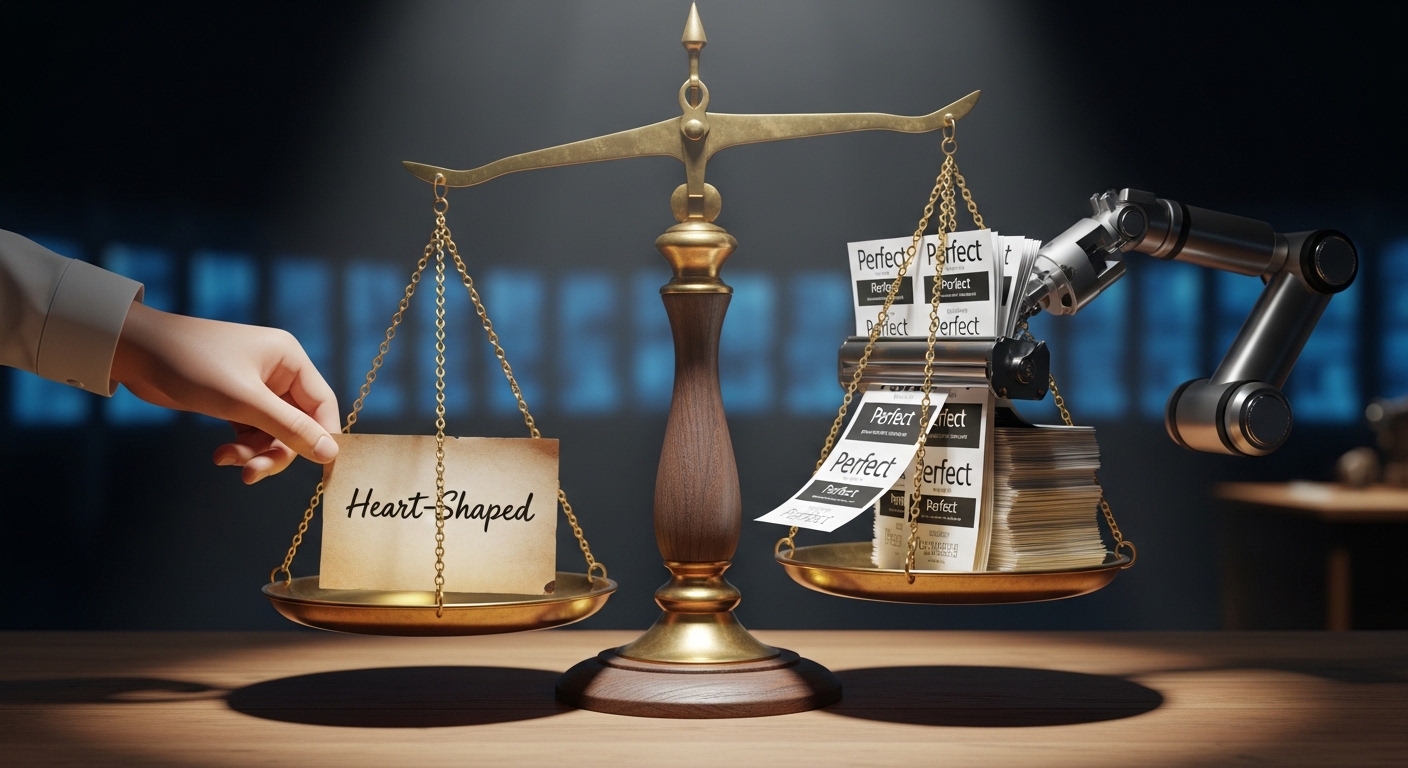


Eighty-two per cent of advertising executives believe Gen Z and millennial consumers feel positive about AI-generated advertisements. Forty-five per cent of those consumers actually do. That thirty-seven percentage point gap represents one of marketing’s most expensive blind spots heading into 2026.
The disconnect isn’t subtle. It’s systematic. And it’s getting worse as marketers accelerate AI adoption whilst consumer resistance intensifies.
IAB research from January 2026 revealed that 83 per cent of advertising executives now deploy AI in the creative process, up from 60 per cent just two years ago. The technology adoption curve points sharply upward. Meanwhile, consumer trust in AI-generated marketing content trends sharply downward. These aren’t parallel lines heading in the same direction. They’re diverging paths toward a crisis that most marketing departments haven’t acknowledged yet.
McDonald’s Netherlands learned this lesson expensively when it deployed an AI-generated Christmas advertisement promising seasonal warmth. Comments flooded in immediately: “ruined my Christmas spirit,” “AI slop,” “soulless garbage.” The company pulled the advertisement within days despite ten people working full-time for five weeks creating it. The production efficiency was impressive. The emotional resonance was absent. And audiences rejected it viscerally before they could articulate why.
Coca-Cola faced similar backlash when its AI-generated holiday campaign drew widespread criticism. The company that created “I’d like to buy the world a Coke,” arguably most beloved advertisement in history deployed algorithm to recreate Christmas magic. Gravity Falls creator Alex Hirsch mocked the campaign, implying Coca-Cola’s iconic red came from “blood of out-of-work artists.”
The response reveals consumer psychology that marketers measuring click-through rates consistently miss. Research published in the Journal of Business Research confirms a pattern: when consumers believe emotional marketing communications are written by AI rather than humans, they judge content as less authentic, experience moral disgust, and show weaker engagement and purchase intent.
This isn’t a hypothetical concern about future consumer behaviour. It’s a measurable business impact happening now, whilst marketing departments congratulate themselves on efficiency gains.
The counter-movement emerged faster than AI adoption itself. Heineken, Polaroid, and Cadbury launched campaigns celebrating work as “human-made.” Apple’s series Pluribus includes “Made by Humans” in the closing credits. These aren’t just marketing tactics. They’re defensive manoeuvres against technology that promised efficiency but delivered an authenticity crisis.
The positioning works because consumers consistently rate identical creative work as more beautiful, meaningful, and profound when told humans created it versus AI. The visual output doesn’t differ. The perceived value does. Researchers call this “authenticity premium “and it’s real enough to reshape competitive positioning in categories where emotional connection matters.
The percentage gap between executive perception and consumer reality suggests systematic failure in how marketing departments evaluate creative effectiveness. Tools optimised for conversion metrics and engagement rates may miss emotional dimensions that drive long-term brand value. Marketers pursuing AI efficiency should question whether the metrics they’re optimising actually correlate with the outcomes they need.
For Nigerian marketers navigating this tension, the implications are strategic. First, production cost savings from AI creative tools come with hidden brand equity costs that don’t appear in quarterly budgets. Trust erosion, emotional disconnection, and authenticity discounting compound over time in ways performance dashboards miss.
Second, the perception gap creates a differentiation opportunity. As competitors race toward AI efficiency, brands investing in demonstrably human creativity can command an authenticity premium. The challenge lies in proving humanity credibly rather than simply claiming it. Consumers have developed sophisticated detection mechanisms, not for identifying AI technically, but for sensing its emotional absence.
Third, the thirty-seven percentage point gap between what executives believe consumers want and what consumers actually want reveals dangerous overconfidence. Marketing departments that built careers reading consumer psychology have fundamentally misread how consumers experience machine-generated emotional content.
The irony is delicious and dangerous simultaneously. Marketing, a profession most exposed to being superseded by AI, is deploying that technology whilst trying to differentiate itself from it. Marketers are building systems that may replace them, then wondering why audiences resist the output. The profession that made careers understanding consumer behaviour has stopped listening to what consumers are actually saying about AI-generated content.
Despite 70 per cent of marketers encountering AI-related issues, hallucinations, bias, and off-brand content, fewer than 35 per cent plan to increase investment in AI governance or brand integrity oversight in 2026. The industry recognises problems but won’t fund solutions. That’s operational negligence disguised as innovation.
The technology itself isn’t a problem. AI excels at pattern recognition, optimisation, and personalisation at scale. These capabilities enhance marketing when deployed strategically. The problem emerges when brands use AI to replace rather than augment human creativity, when efficiency becomes an end rather than a means.
McDonald’s pulled its Christmas advertisement. Coca-Cola faced backlash. Brands launched “Made by Humans” campaigns. These aren’t isolated incidents. They’re early warnings that marketing’s efficiency revolution may be eroding emotional foundations that made the profession valuable in the first place.
Marketers love AI because it solves production problems they face daily. Consumers are pushing back because it creates emotional problems they experience viscerally. The question isn’t which group is right. The question is whether marketing executives will notice the gap before it becomes chasm that brands can’t bridge with algorithms.
Eighty-two per cent of advertising executives believe one thing. Forty-five per cent of consumers believe another. Somebody’s wrong about the future of marketing. And it probably isn’t the people spending money on products.
ALSO WATCH:MARKETING EDGE ONTV



Comment
No comments found.