


African startups pulled in $705 million across 59 disclosed deals during the first quarter of 2026, according to data from Condia’s funding tracker. The headline number looks healthy. The composition underneath reveals fundamental restructuring of how African companies access growth capital.
Debt financing overtook equity for the first time in the continent’s tech funding history. Pure equity raised approximately $212 million. Debt and hybrid instruments combined exceeded $490 million. That’s not a temporary market condition. It’s a structural pivot away from venture capital toward instruments that reward profitability over promise.
For much of African tech’s funding history, debt was what you settled for when equity dried up. The story in early 2026 looks different. Egypt’s ValU raised $63.6 million in debt from the National Bank of Egypt. South Africa’s SolarAfrica closed a $94 million project debt round from Rand Merchant Bank and Investec. Kenya’s Cold Solutions secured $19 million in debt from Mirova. These represent strategic choices by mature companies that found a more cost-effective way to scale without diluting ownership.
The shift matters because debt favours different companies than equity does. Venture capital funds experimentation, tolerates losses, and bets on exponential outcomes. Debt demands predictable revenue, operating history, and assets that can secure repayment. Early-stage startup testing product-market fit can’t access debt capital. Growth-stage companies with proven business models can, and increasingly prefer it.
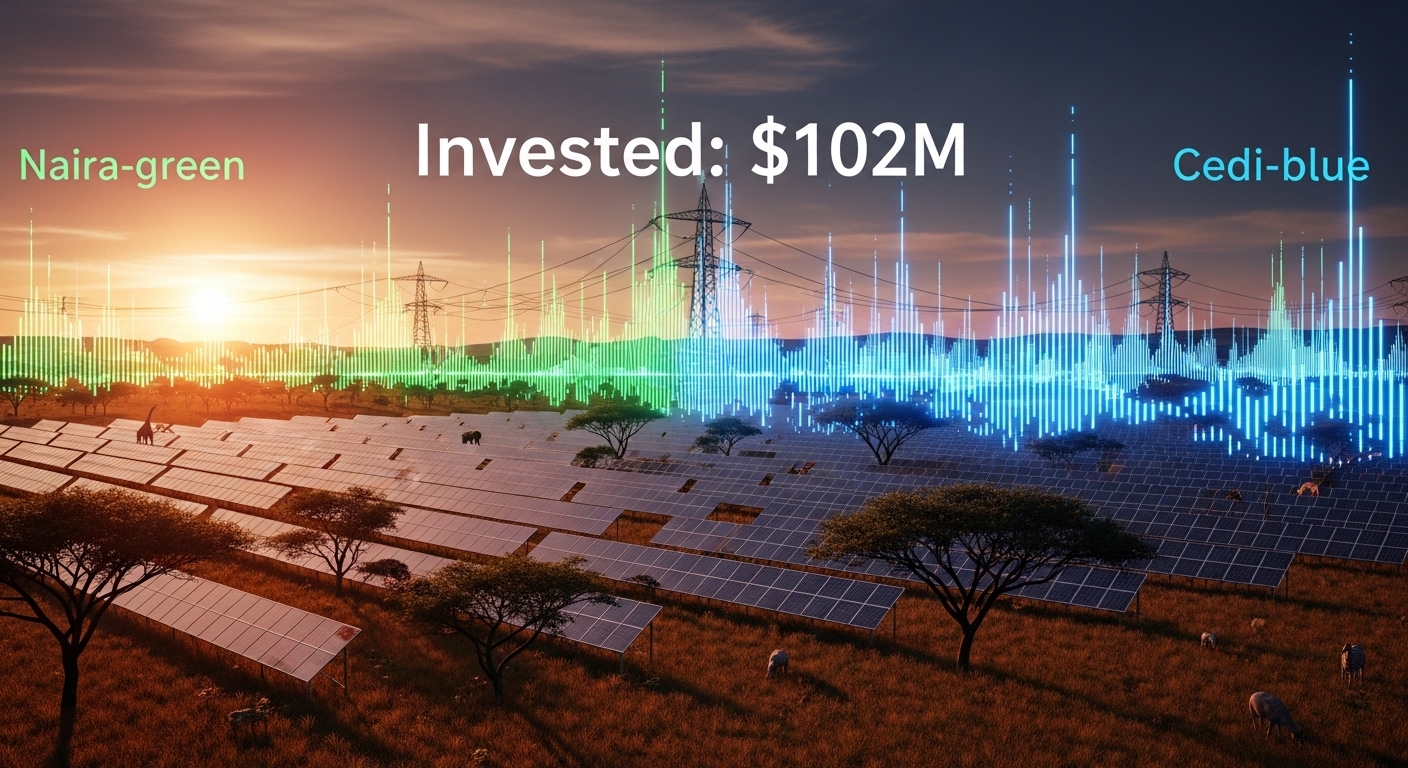
Fintech maintained sector dominance with 20 deals raising approximately $208 million, consistent with every prior year of African tech data But other sectors are closing the gap. Cleantech secured $102 million across just three deals, driven largely by SolarAfrica’s massive financing. Agritech raised $59.5 million, led by a $53 million round for Sistema.bio in Kenya.
The geographic concentration that defined 2025 carried into 2026. Egypt captured $190 million, the largest share of any market. South Africa followed with $157 million. Kenya took $114.5 million. Nigeria recorded $78 million despite having the highest number of deals. The “Big Four” markets continue commanding an overwhelming majority of capital whilst the rest of the continent fights for scraps.
Growth-stage deals dominated Q1 2026, accounting for nearly 40 per cent of total disclosed funding, approximately $275 million. The average growth-stage deal reached $20 million. SolarAfrica, ValU, Breadfast, GoCab, Spiro, and Max all raised rounds above that threshold. These aren’t companies proving concepts. They’re expanding infrastructure, entering new markets, or deepening penetration in markets they already dominate.
Investors in early 2026 are still writing seed cheques. But the largest bets are going to companies that already earned the right to ask for more. That’s a profound shift from the 2021-2022 era when capital flowed freely to early-stage companies based on TAM calculations and growth projections. Current market rewards execution over ambition.
The venture capital pullback shows most clearly in stage distribution. Launch Base Africa data reveals that Series A rounds dropped from over 10 in January-February 2025 to just four in January-February 2026. Series B rounds
disappeared entirely, with zero recorded in early 2026 versus three during the same period in 2025. Companies that previously would have pursued growth equity opted for structured or hybrid financings instead.
US-based investor participation collapsed 53 per cent year-over-year. European venture funds pulled back. Development finance institutions and state-backed investors filled the gap. IFC, British International Investment, DEG, and other DFIs participated in the majority of significant deals, signalling that patient capital from institutions with development mandates is replacing impatient capital from venture funds chasing unicorn exits.
Japan emerged as an unexpected growth market for African startup investment. Japanese participation shifted from a fintech focus in 2025 to hardware, infrastructure, and logistics in 2026. Musashi Seimitsu Industry backed Kenyan e-mobility player Arc Ride. Daiwa House Industry supported infrastructure plays. The strategic rather than cyclical nature of Japanese investment suggests long-term commitment to African infrastructure buildout.
For Nigerian marketers and brand strategists, the Q1 2026 data carries strategic implications. First, the debt revolution favours companies with predictable revenue streams over those chasing viral growth. Brand-building that drives sustainable customer acquisition becomes more valuable than growth hacking that inflates metrics temporarily.
Second, the geographic concentration means Nigerian startups face an uphill battle for capital despite having the highest deal count. Egypt attracted 2.4 times more capital than Nigeria. South Africa pulled in twice as much. Nigerian founders need either exceptional traction or a willingness to relocate operations to markets where capital flows more freely.
Third, sector diversification beyond fintech creates opportunities for companies building infrastructure, mobility solutions, and agricultural technology. The $102 million flowing into three cleantech deals suggests investors are backing capital-intensive businesses that traditional venture avoided. Nigerian companies operating in these sectors should position themselves for debt financing rather than waiting for equity that may not materialise.
The ecosystem showed signs of stress alongside capital inflows. Over 1,300 layoffs occurred during Q1 2026, with Kenyan climatetech firm KOKO eliminating the entire 700-person team after a carbon credit dispute. Startups including Zap Africa and Kuda cut staff whilst pivoting toward AI and core business units. Jumia exited Algeria. Uber ceased Tanzania operations. Showmax announced closures to reduce costs.
These shutdowns and contractions reveal a market sorting mechanism at work. Companies that raised capital during the 2021-2022 boom years are hitting reality checks. Investors who funded “growth at all costs” strategies are demanding profitability. Startups that can’t demonstrate a path to positive unit economics are running out of runway.
The $705 million raised in Q1 2026 represents more capital than African startups secured during comparable periods in 2022, 2023, or 2024. But the nature of that capital has changed fundamentally. Debt overtaking equity signals ecosystem maturation. Growth-stage dominance shows capital concentrating in proven business models. Geographic concentration reveals where institutional investors have confidence.
African startups aren’t facing a funding drought. They’re facing funding discipline. Investors are still deploying capital. They’re just deploying it to companies with revenue, business models that withstand scrutiny, and paths to profitability that don’t require heroic assumptions. Early-stage experimentation still gets funded. But at a much smaller scale and with a much higher bar for traction.
The strategic question for African founders becomes: can you build a business that qualifies for debt financing, or do you need venture equity to reach that milestone? Companies answering “yes” to the first question have access to record amounts of growth capital. Those requiring equity to get there face a much tighter market with fewer investors, higher bars for traction, and longer timelines between rounds.
Q1 2026 proved African startups can still raise substantial capital. It also proved that capital increasingly flows to companies operating like businesses rather than science experiments. The $705 million tells you how much money moved. The debt-versus-equity split tells you which companies actually received it.
ALSO WATCH:MARKETING EDGE ONTV


Comment
No comments found.