
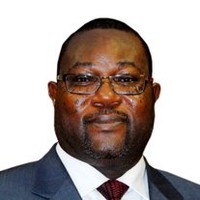


After more than four decades of relentless service, the long and defining professional voyage of Adetunji Oyebanji at 11Plc is drawing to a close, as the respected corporate executive prepares to retire from the organisation he helped shape across generations of industry transformation.
The company confirmed that its Managing Director will step down from his position on March 31, 2026, bringing to an end a professional chapter that has stretched across 45 remarkable years of continuous contribution to the energy and marketing landscape.
Thus, the announcement signals more than a routine leadership transition. Instead, it marks the quiet conclusion of a career that steadily climbed through the ranks of one of Nigeria’s most recognisable energy brands.
For the Board of Directors, the moment invites both reflection and gratitude. Consequently, the board openly celebrated the executive’s decades of leadership, acknowledging the discipline, institutional knowledge and steady guidance that accompanied his stewardship of the organisation.
Indeed, his professional story began humbly but purposefully. Back in 1980, a young Oyebanji walked into the doors of the then Mobil Oil Nigeria Plc as a Marketing Representative Trainee. Yet, step after step, responsibility after responsibility, and year after year, he steadily advanced through the intricate layers of corporate leadership.
First, he navigated roles such as Planning Associate and Pricing Manager. Then he moved deeper into operational leadership as District Manager and Branch Manager. Soon afterward, he rose to Manager, Fuels Services. Eventually, he entered the executive ranks as Executive Director, Fuels, where strategic oversight became central to his responsibilities.
Each stage of that professional climb therefore formed a building block, and collectively those experiences prepared him for the defining moment of October 2008 when he assumed leadership of the organisation as Chairman and Managing Director.
Later, when ExxonMobil divested its stake in the Nigerian business, the company evolved into its current identity as 11Plc. Consequently, in April 2017, Oyebanji transitioned into the role of Managing Director and Chief Executive Officer of the newly structured entity, guiding the company through one of its most important corporate transitions.
From that moment onward, he led the organisation through an era that demanded resilience, structural adjustments and strategic recalibration within Nigeria’s downstream energy sector.
Meanwhile, his professional influence extended far beyond the boundaries of a single company.
Today, he serves as President and Chairman of Council of the Chartered Institute of Directors Nigeria, where he continues to shape conversations around corporate governance and leadership standards.
Earlier in his journey, he chaired the Major Energy Marketers Association of Nigeria. In addition, he led the Petroleum Downstream Group of the Lagos Chamber of Commerce and Industry, further cementing his role in shaping policy discussions within Nigeria’s energy ecosystem.
Furthermore, he contributed his expertise as a Council member of the Nigerian Institute of Management, while also serving on the council of the Lagos Chamber of Commerce and Industry.
For more than a decade, he also sat on the board of the Society for Corporate Governance Nigeria, strengthening institutional governance conversations across corporate Nigeria. Yet his professional reach did not stop at Nigeria’s borders.
At different points in his career, the executive served within the global structure of Mobil’s international operations. For instance, he worked as a Project Associate at Mobil Oil Corporation’s headquarters in Fairfax, Virginia in the United States.
Soon afterward, he moved into regional responsibilities as Manager, Planning for Mobil Africa Sales Inc. Later, he expanded his operational footprint across the continent, serving as Executive Director at Mobil Oil Cameroon and subsequently at Mobil Oil Ethiopia.
Ultimately, his leadership trajectory reached a broader global dimension when he assumed the position of Manager, Industrial and Wholesale Fuels for Africa and the Middle East, operating from Belgium while reporting to the global leadership structure of the organisation.
Consequently, the professional journey that began with a trainee position evolved into a global leadership experience spanning multiple countries, multiple markets and multiple operational systems.
However, beyond titles and boardrooms, Oyebanji also became widely respected for his voice in shaping conversations around sustainability and responsible corporate practice.
In an earlier conversation with MARKETING EDGE, the seasoned marketing professional strongly urged brands and businesses to deepen their understanding of local communities. Only through that understanding, he argued, can companies meaningfully embed sustainability into the lifecycle of their products and services.
According to him, the future of business will increasingly revolve around responsible consumption and circular economic models.
He therefore encouraged companies to develop innovative processes that minimise waste, reduce environmental harm and align business operations with global sustainability expectations.
Speaking during the interview, he pointed out that modern consumers increasingly judge organisations through the lens of Environmental, Social and Governance standards.
“The current trend is focused on Environmental, Social and Governance,” he explained. “Environment is particularly important because our major product comes from oil, which is obviously a dwindling resource. That reality means we must begin to explore alternative energy sources beyond fossil fuels so that we can protect the environment and support long term sustainability.” Equally, he emphasised that sustainability extends far beyond environmental responsibility.
He therefore urged businesses to address social impact within their operating environments. In practical terms, he explained that organisations must look beyond profit to consider how their activities improve the lives of surrounding communities.
According to him, corporate social responsibility should not simply involve donations or charitable gestures. Instead, businesses must build structures that genuinely improve social wellbeing and uplift communities.
“Impacting society includes everything we typically describe as CSR,” he said. “It means asking what you can do to improve the lives of people around you, especially the less privileged, so that the impact of your business is felt socially.”
At the same time, he emphasised that governance remains a critical pillar of sustainability. In his view, strong governance requires organisations to maintain transparent internal structures, obey regulatory frameworks and maintain ethical discipline in how businesses operate.
“Governance means paying your taxes on time, following the rules that guide your company and complying with government regulations,” he explained. “It is an all encompassing responsibility that ensures your organisation operates sustainably without harming the environment.”
Throughout his career, those convictions shaped his leadership philosophy. Indeed, colleagues and industry observers frequently describe him as a disciplined corporate figure who believes deeply in integrity, punctuality and consistency.
Speaking years ago about the principles that guided his professional life, he offered a simple but powerful reflection.“In the course of my nearing 40 years career, I can confidently say that hard work, consistency, integrity and prayer are very essential to whatever you set out to achieve in life,” he said.
Even though he was born into privilege, he never allowed comfort to weaken his drive or ambition. Instead, he pursued a career defined by discipline and perseverance.
His influence also extended into professional marketing institutions. He previously served as Chairman of the Board of Fellows of the National Institute of Marketing of Nigeria, further reinforcing his reputation within the marketing profession.
Over time, industry recognition followed. Among numerous honours, he received the prestigious MARKETING EDGE Lifetime Achievement in Marketing Award, acknowledging his long standing contributions to marketing and corporate leadership.
Meanwhile, even as he prepares to leave corporate office, his reflections on the evolution of marketing in Nigeria remain optimistic.
“Marketing has evolved in Nigeria just as it has evolved around the world,” he observed. “We may not yet be where we should be, but we have certainly progressed. The practice here is not far behind global standards.”
Indeed, his tenure at 11Plc coincided with major transitions within Nigeria’s downstream petroleum sector. Through restructuring, ownership changes and market shifts, he guided the company with steady resolve.
Today, both the board and management of the organisation openly express pride in the leadership that helped steer the company through those defining moments.
As the final chapter of his executive career approaches, colleagues say his legacy will continue to resonate within the organisation and across Nigeria’s corporate landscape.
And so, as March 31 approaches, the curtain gently falls on a professional journey that began as a trainee’s ambition and matured into a leadership legacy spanning continents, institutions and industries.



Comment
No comments found.